

90% of startups fail.
Let that sink in for a second. Nine out of ten people who invest their blood, sweat, and tears into building a startup will eventually watch it collapse into dust.
Most people hear that stat and run the other way. Chase Edmonds looked at those odds and thought: “I’ll take those chances.”
After eight NFL seasons, he could have simply followed the traditional athlete playbook: sign a few endorsement deals, throw some money into index funds, or buy some rental properties. All safe, proven, and predictable ways to grow his wealth.
But instead of stopping there, he decided to build a startup.
Not advise one. Not invest in one. Build one. From the ground up. With his own money. Fully aware that he could lose every dollar he put into it.
Earning the Right to Earn

Ask Chase why he chose the business world’s equivalent of a Hail Mary, and his answer shows why he’s different.
“If you’ve built a startup, you can pretty much do anything after that. There ain’t nothing more difficult than building and competing in tech,” he claims.
Truth is, Chase is playing an entirely different game. While most athletes focus solely on financial returns, he’s optimizing for something he believes to be more valuable at this stage of his life: an education that would pay dividends for the next few decades.
Startups are risky, and he knows the odds are against him. But he’s not just betting on his startup - he’s betting on himself.
Think about it. Convincing investors to write him a seven-figure check? That’s sales at its highest level, the kind of skill that translates to any business. Managing a team through the emotional rollercoaster of building something from nothing? That’s leadership skills he can take to any boardroom.
“The way I see it, this is my investment in myself,” he explains. “Even if it fails, I’ll bring everything I learned to whatever I do next.”
For Chase, building a startup is like earning an MBA. But instead of sitting in a lecture room analyzing decade-old case studies, he’s in the trenches learning from real-world experience where every decision he makes has real consequences.
If his startup succeeds, he’ll earn millions, and maybe even billions. If it fails, he’ll earn the most valuable currency in business: experience.
Finding His Billion-Dollar Problem
The idea for Chase’s startup came from his own travel frustrations. When traveling for games, Chase kept running into the same problem: finding places that match his vibe was unnecessarily complicated.
During away games, Chase often found himself scrolling through endless lists and reviews, wasting hours every time. Every app sucked. Google search results felt generic. Yelp reviews were unreliable. YouTube videos were scattered all over the place. The entire discovery process felt broken.
“In the digital age that we are in right now, I can travel anywhere in the world and my phone should be able to give me personalized recommendations,” he explains. “My phone collects so much data on me, but everything feels so disconnected.”
His solution? Sceene, an app that actually gets him. “It’s TikTok’s content discovery meets OpenTable’s venue booking,” Chase explains. It syncs with your network, remembers your favorite spots, and delivers recommendations that feel hand-picked. It’s like your phone knows your vibe before you do. Instead of drowning in hundreds of random options, he wants to touch down in a new city and have his phone say: “Here are five places you’re absolutely going to love.”

The leap from NFL player to first-time entrepreneur hasn’t been easy. For the past few years, Chase has been juggling two full-time careers: NFL player by day, founder by night. “I built a good team around me, and I approach my startup the way I approach football, with focus and discipline,” he says.
But today, the balance has shifted.
When a season-ending injury sidelined him 2024, it unlocked a new obsession. “I couldn’t stop thinking about solving this travel problem,” he recalls.
Before signing with the Washington Commanders in late 2025, Chase had been channeling the bulk of his energy into building an app in a space dominated by tech giants. Along the way, he’s collected five hard-earned lessons from choosing the toughest path possible - lessons that could give athletes a head start if they decide to step into the world of startups.
Lesson #1: Let Your Users Call the Plays
Chase was at a business conference in Las Vegas, pitching his app to a potential user. He was walking her through all the features he’d built. But it wasn’t resonating, until he mentioned they were offering Uber vouchers to a specific nightclub for first-time users.
Her eyes lit up: “Oh, so you guys are like a transport company!”
That wasn’t what he wanted to be. But that was the perception at the time. That moment hit Chase hard: it doesn’t matter what you think your product is - what matters is what your users think it is.
He realized that product development isn’t about building the perfect features. It was about putting something real in front of users and watching how they behaved. “I wish I had launched sooner,” he admits. “I had this mindset of, ‘Give me 8 hours to chop a tree, and I’ll spend 7 sharpening my axe.’ That worked in football. But in startups, you can’t be a perfectionist.”
"Never fall in love with your product. Focus on the problem you're solving.”
He started with athletes who shared his travel frustrations, then expanded to business travelers. Each group taught him lessons he couldn’t have learned if he’d bought into the fairytale that startups are built in a garage.
Launch fast, get feedback, adapt - that’s his mantra now.
“At the end of the day, you can’t get too emotionally invested in your ideas and ignore what users actually want,” he says. “You’ve got to see things from their point of view.”
Chase learned this lesson by watching his product take on a life of its own in the hands of real users. At times, it meant being called a “transport company” even when he envisioned something entirely different. It was a humbling reminder for him: the product vision may start with the entrepreneur, but it ends with the user.
Lesson #2: Turn Your Brand Into a Distribution Advantage
There’s a saying in the startup world: first-time entrepreneurs obsess over product, second-time entrepreneurs obsess over distribution.
Chase agrees. Even as a first-time entrepreneur, he’s learned quickly that the difference between success and failure isn’t just about the product you build, it’s about how effectively it reaches the people who need it.
After all, Facebook wasn’t the only social network, Uber wasn’t the only ride-sharing app, and ChatGPT wasn’t the only AI tool. What set them apart was superior distribution.
“Distribution can be a moat,” Chase explains. “There are so many apps out there, and if you don’t have a way to stand out from the crowd, you’re going to be just one of the thousands of apps in the app store.”
For Chase, his NFL credentials became his unfair distribution advantage, but not in the obvious way. He didn’t just lean on fame. Instead, he used his understanding of the hospitality industry and his network to strike partnerships with local venues in different cities.
Take his partnership with TAO Group Hospitality in Las Vegas. While most startups were burning cash on Google and Facebook ads, Chase leaned on a simple but clever strategy: “For every person who downloads our app at a conference, we’ll send them an Uber voucher straight to their nightclubs.”
The results were immediate. Conference attendees enjoyed free rides. The nightclubs saw a steady stream of customers without paying for ads. And Chase? Hundreds of app downloads per day - all at a fraction of the cost of traditional advertising.
“Relationships are key,” Chase emphasizes. “My network and influence as an NFL player helped me get strategic partnerships that others couldn’t.”
But what most athletes miss is that they can’t just show up as “the famous guy” and expect deals to happen. Chase spent time learning the ins and outs of Las Vegas nightclubs - traffic patterns, spending behavior, and what owners truly care about. His NFL credentials may have helped open the doors, but it was his business acumen that helped closed the deals.
Lesson #3: Hire Missionaries, Not Mercenaries
“If I could go back in time and do one thing differently, it would be to fire faster and hire slower,” Chase says.
For him, early hires don’t just work for the company - they become the company. They define the culture and set the bar for everyone who comes after. Get it wrong, and the cost isn’t just payroll - it’s momentum, morale, and sometimes years of progress.
At first, Chase focused purely on skills. Logical, right? Hire the best and success will follow. But over time, he learned something counterintuitive: “I’d rather hire someone who’s a 6 out of 10 on skill but 10 out of 10 on heart.”
Why? Because heart drives work ethic. And work ethic shows up when the going gets tough.
“It’s not the size of the dog, it’s the size of the fight in the dog,” Chase explains, a mantra he’s carried since college football. “Most days are a grind. Heart determines who sticks around when we have setbacks.”
Today, much of Chase’s job is about putting the right players on the field - assembling a team that shares the same mission, can execute under pressure, and adapts to challenges. His hiring framework now focuses on three key questions:
Do they genuinely believe in what we’re building?
Can I have open and honest conversations with them?
Will they have the grit to push through difficult situations?
Everything else can be taught.
Above all, Chase looks for missionaries, not mercenaries - the kind of people who buy into the mission so deeply that they’ll give their all, even when the outcome is uncertain. Because in the early days, a startup lives and dies by its people - and they’re often the difference between landing in the 10% that make it or the 90% that don’t.
Lesson #4: Find Smart Capital
Early on, Chase approached investors with “the perfect pitch deck” - every scenario mapped, every assumption justified, every risk accounted for. He thought he was bulletproof.
Turns out, it was working against him.
“Investors are looking for reasons not to invest,” he realized. “The more information you give them, the more reasons they can find to say no.”
From an investor’s perspective, there are literally millions of ways a startup can fail. That five-year financial projection suddenly looks risky. That detailed competitive analysis now raises doubts about differentiation. Every line meant to impress just gives investors a reason to say no.
So Chase learned to flip the script. He stripped his pitch deck down to what actually mattered: the problem he was solving, why he was uniquely positioned to solve it, and the early signs that people actually wanted what he was building. Clean, focused, compelling.
“Less is more,” he discovered. “Give them just enough to get excited, then let the conversation fill in the details.”
But that was only part of the lesson. Over the years, Chase realized that who writes the check matters more than the check itself. Some investors only offer capital; others become connectors and mentors who help navigate the minefield that trips up first-time entrepreneurs. He calls the latter “smart capital” - funding that comes with boosters that can help accelerate a startup’s growth.

Looking back, those early rejections were gifts in disguise. Each “no” forced him to sharpen his pitch and focus on the investors who could actually help him win. Now, Chase approaches fundraising like free agency: he’s showcasing his skills, experience, and upside while evaluating which investors give him the best chance to succeed.
Lesson #5: Experience is the Greatest Teacher
Here’s what most people don’t realize when they first think about building a startup: you don’t know what you don’t know. And the gap between expectation and reality? It’s massive.
Chase doesn’t sugarcoat it. “Zero-to-one is tough,” he admits. “90% of the things you do aren’t going to go as planned. But you gotta fail to learn, and you just keep your head down and keep grinding.”
It’s the same mindset he carried through the NFL. Hours in the film room, extra reps after practice, conditioning in the offseason that no one sees - those are the things that separate players who make it from players who don’t. The same is true in startups.
In the early days, he read everything he could get his hands on. Peter Thiel’s Zero to One became his blueprint for thinking about competition and distribution. He reached out to mentors, like former teammate Larry Fitzgerald, who connected him with early Google employees to learn from their experience.
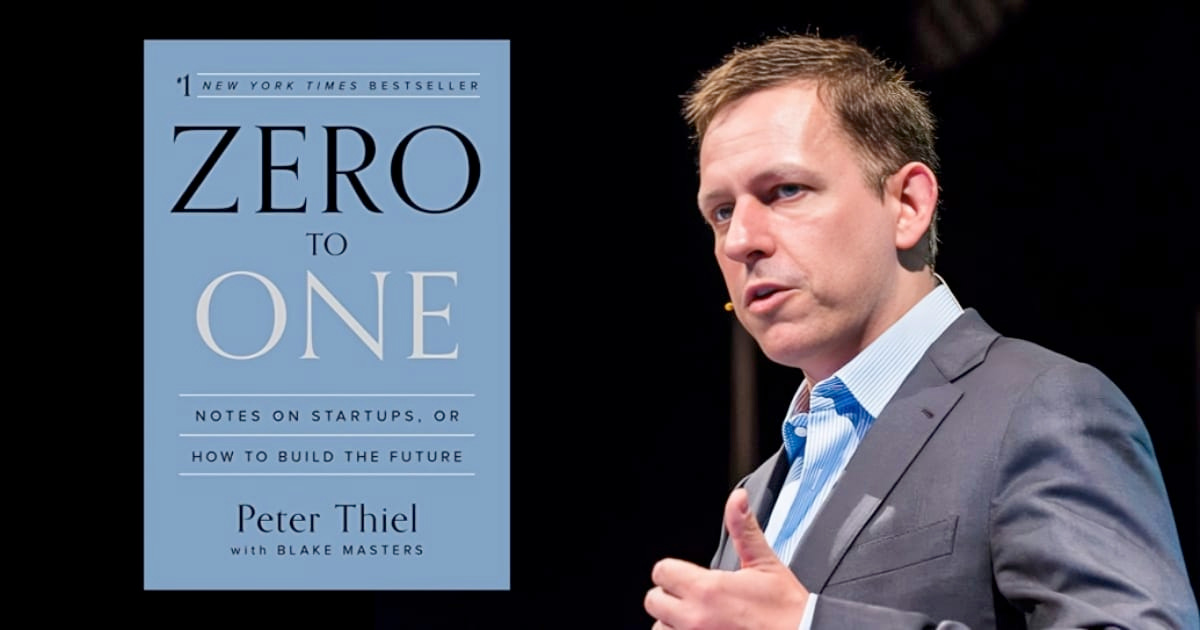
But even with all that preparation, Chase quickly realized there’s a world of difference between studying the game and playing it.
“There is no greater teacher than real experience. Period.”
That’s where his background as an athlete gave him an edge. Years of performing under pressure, bouncing back from failure, and showing up consistently every day created a quiet advantage - one that translates perfectly to startup life.
Whether on the field or in a startup, Chase knows the rule: studying the game only goes so far. The lessons only stick once you step onto the field and experience it firsthand.
Tying It All Together
Chase’s journey from NFL player to first-time entrepreneur is a case study in embracing uncertainty. In retrospect, he doesn’t know how he had the courage to build a startup, just that he did, and that it’s the hardest game he’s played off the field.
Whether Sceene becomes the next billion-dollar company or simply a valuable learning experience, he’s building the kind of wealth that can’t be measured in dollars, at least not right away. From launching products faster and building distribution advantages, to hiring the right people and finding smart capital - every lesson has been earned through real experience.
Chase is living proof that athletes don’t have to be passive capital allocators watching from the sidelines. They can be builders too.
For athletes considering entrepreneurship, his message is simple: startup life isn’t easy, the odds are stacked against you, and failure is part of the game. But the lessons and the growth? They become the foundation for every opportunity that follows. And sometimes, the hardest game off the field is also the most rewarding.
Want the inside scoop on Chase? Catch him on LinkedIn, Twitter, or Instagram.
Check out more stories here:

