
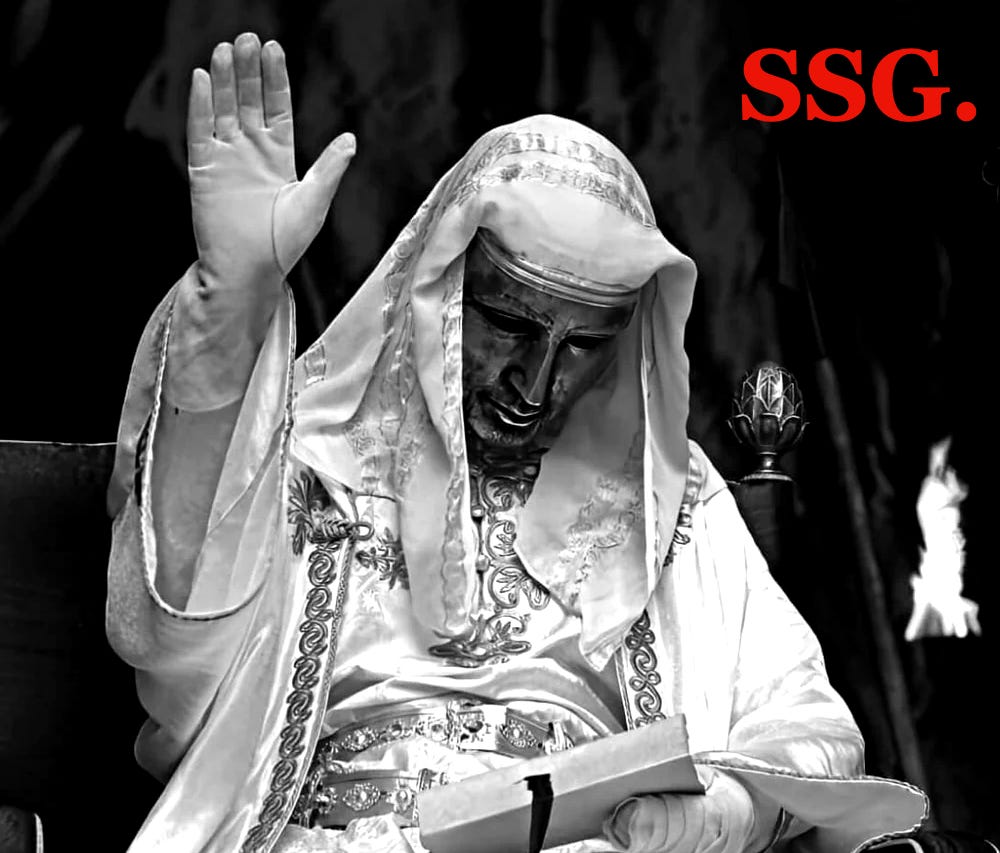
Baldwin IV was a sick man.
A sick boy, to be precise. His parents separated at the age of two, and by the time he was nine, Baldwin IV was sent to be educated by the Archbishop of Tyre. His father was Amalric, king of Jerusalem, and his mother was Agnes, the king’s wife, who had her marriage annulled after the nobles of the kingdom demanded that Amalric was to separate from her if he was to take the throne. Agnes remarried, Amalric remarried, and their young son grew up a glorified bastard. As noted previously, Baldwin was sent to the Archbishop early in his life to learn the ways of a priest-king. History has it that Baldwin was an unusually intelligent child with a robust memory. He was also quite religious.
When I say Baldwin IV was a sick boy, I mean death followed him wherever he went. He was a leper. Today, around 200,000 cases of leprosy are reported globally each year, with the bulk of cases coming from relatively underdeveloped, high population countries like Brazil, India, Indonesia, Bangladesh, and Nigeria. The disease is now fully curable using multi-drug therapy. Less than 200 cases are reported in the U.S. each year. But in Baldwin’s time, to be a leper was to be a dead man walking. There was no cure, and the stigma of carrying that cross could kill even a king’s reputation.
Baldwin IV became king at the ripe age of thirteen. He inherited a kingdom at war, and an awfully consequential war at that. The city was on fire; exposed, defenseless. Saladin, a powerful sultan, unified Muslim forces across Egypt, Palestine, and Syria, and during the Crusades, Saladin had the advantage. The young fella issued a call to arms requiring every able-bodied man to prepare to defend Jerusalem. Only three hundred knights showed up, and roughly a thousand civilians joined the cause.
Baldwin and the guys met Saladin face to face in Ascalon on November 22, 1177. Saladin pulled up twenty thousand deep. Baldwin lost faith and cowered into retreat like Jonah running to Tarshish. Saladin and his army started to march past them to Jerusalem, as there was no need to fight anymore, the kingdom was theirs. Somehow, the king of Jerusalem made a desperation cry to his team of special forces, Knight Templars, the crown jewel of an otherwise unremarkable army. The Knights were busy fighting battles in Gaza, but upon hearing about their king’s danger, made the journey north.
Three days later, around eighty Knights Templar and King Baldwin united near Montgisard. In a final act of surrender, Baldwin, now fully violated by the sword of leprosy, ordered the Cross that Jesus Christ died upon be brought to him. Soldiers helped the crippled sixteen year old off his horse, and Baldwin fell on his knees before the Holy Cross, praying fervently for a victory against his adversaries. At this point, Baldwin could hardly walk. The only reason the army continued on was because they had nowhere else to go. It was too late for extended retreat, they were surrounded, and Baldwin couldn’t ride his horse much further.
By now, Saladin and his men were spread out from Ascalon to near Jerusalem. They had twenty times the manpower that Baldwin’s army had, not to mention, more skilled fighters as well. But in a luminous miracle, King Baldwin and the Knights Templar absolutely ravaged the seemingly unstoppable forces that enclosed them. They caught Saladin’s troops off guard in Montgisard, killing and capturing enemy bodies in a fury. Saladin himself barely escaped on a camel. Baldwin, a gaunt high schooler on the verge of death, emerged untouched. Not a pinky nail
God shows His Power through the smallest vessels. In Deuteronomy, Moses tells the Israelites “it was not because you are more numerous than all the peoples that the Lord set His heart on you and chose you; for you are really the smallest of the peoples.” Joseph would go on to manage the entire wealth of Egypt after being sold into slavery by his brothers. David would experience rejection from his local village before slaying Goliath with a rock as a youth. The greatest men in the world are built up like the Tower of Babel simply to be brought back down, in dramatic fashion, by the lowly soldiers who trust that God still does miracles for his children, so that, in an act of utter mercy, the once proud and arrogant can return to the truth. King Baldwin is a descendant of this lineage.
There’s more to the story.
If Baldwin didn’t send a bat signal to the Knights Templar for help, maybe things would have been different. Eighty men drove disproportionate value in the victory; less than 10% of the army accounted for almost half of the spoils. In some sense, the Knights Templar were the original SEAL Team Six.
Goldfinger is the 007 movie that made James Bond James Bond, but to older alumni of Goldman Sachs, the name is simply an alias for Mark McGoldrick. He earned the nickname not because of his last name, McGoldrick, the perfect name for a fictional character in a Wall Street blockbuster, but rather because of his ability to turn any investment into a goldmine for Goldman.
In 2007, McGoldrick felt his efforts weren’t being compensated fairly and he left the firm.
He made $70 million the year prior, more than Goldman Sachs CEO Lloyd Blankfein ($53 million), Morgan Stanley CEO John Mack ($41 million), NBA star Shaq O’Neal ($34 million), and, for good measure, the highest paid actor that year, Tom Cruise ($67 million).
A $70 million man was complaining about compensation.
This is when the media learned who McGoldrick was, and by extension, what the most secretive, profitable group at Goldman was.
The Goldman Sachs Special Situations Group, aka SSG.
In the summer of 1997, the Asian Financial Crisis started in Thailand and naturally spread to other countries in Southeast and East Asia. The Thai currency, baht, was in trouble due to a lack of sufficient foreign currency reserves to support its currency peg to the dollar. Investors began to sell the baht, and nearby countries suffered collateral damage as well. South Korea and Indonesia took especially large hits. The collapse created opportunity; otherwise fundamentally sound assets in the region became distressed and started selling at deep discounts. At the time, Goldman Sachs would capitalize on opportunities like this by delegating to its bond trading team or another asset-class specific pod. McGoldrick, a Boston born trader who previously worked at a Canadian bank before joining Goldman, thought the opportunity in the Asian Financial Crisis was too big for a generalist team. He pitched management to lead a specialist unit of traders and investors that could focus solely on the Asian trenches. The group was called Special Situations Investing.
Asia was burning. No American investor wanted to be stuck in the fire, and the capital flight from the region caused prices to drop in a seemingly permanent freefall. The domino effect meant that local businesses couldn’t pay on their debts anymore, leaving the local banks nearing collapse under the weight of non-performing loans on their balance sheets. Goldman’s Special Situations Investing unit was one of the only institutional investors willing to buy these loans for pennies on the dollar. In addition to distressed debt, the team bought entire portfolios of Thai real estate and auto loans. When the region stabilized circa 1999, Goldman generated truly special returns. And they kept 100% of their spoils.
That last sentence might be the most intriguing detail on GS Special Situations structure. The money Goldman deployed through the unit was straight off the Goldman balance sheet, meaning, they did not go out and raise from external investors, which would imply a 20-30% cut for Goldman if money was made. SSG, at the time known as SSI, was playing with lunch money from pops. So naturally, the smartest, most cutthroat investors at GS gravitated towards the group; it was a chance to work at the most flexible hedge fund in the world, bankrolled by the most talented bank in the world. Very few infiltrated the ranks, but the ones that did got paid like athletes.
One of those guys was Alan Waxman. Waxman joined the firm in 1998 after graduating from UPenn, and in just eight years, became a partner in the Special Situations group. A Goldman partnership is one of the most prestigious, rewards-laden ranks on the Street; even better that Waxman got to work alongside Goldfinger as an SSG general. Best of all, Waxman was one of the youngest partners at the firm. By 2008, a year after Goldfinger turned down $70 million from SSG to start Mount Kellett Capital Management, Waxman had assumed the role as CIO of the SSG unit. By November 2008, Waxman followed in the footsteps of his predecessor. He needed fresh air.
The timing between Goldfinger and Waxman’s departures is not coincidental. As mentioned previously, SSG was investing from Goldman’s balance sheet, and in 2008, the financial crisis was roaring, hence, the writing was on the wall for impending regulatory changes. During the crisis, Goldman transitioned its corporate structure to a bank holding company, which meant more oversight. The all-encompassing freedom once granted to the select soldiers of SSG was gone. The prison of bureaucracy was now homebase.
In 2009, Waxman created Sixth Street in partnership with TPG; the private equity giant pledged $2B to bring Waxman’s vision to life. Waxman’s vision was exactly what you think it is: recreate the original SSG. The defining characteristic of Sixth Street’s differentiation is their TAO capital platform, a $30B pool without any time constraints or thematic mandate, or, for that matter, restrictions, period. TAO stands for “Thematically focused, Adaptable, and Opportunistic.” It is the heart and soul of Sixth Street’s growth from a TPG offshoot to an independent $135B asset manager that is now approaching TPG in size. Sixth Street has amassed assets in private credit, private equity, public equity, real estate, infrastructure, and late-stage venture capital. They were involved in snapping up assets during the Credit Suisse wind-down, led a late stage convertible debt round in Spotify, co-invested $1B into Airbnb alongside Silver Lake, and acquired significant minority stakes in the Boston Celtics, San Antonio Spurs, San Francisco Giants, and Real Madrid. I’d be surprised if SEAL Team Sixth isn’t knees deep in Mark Walter’s portfolio right now.
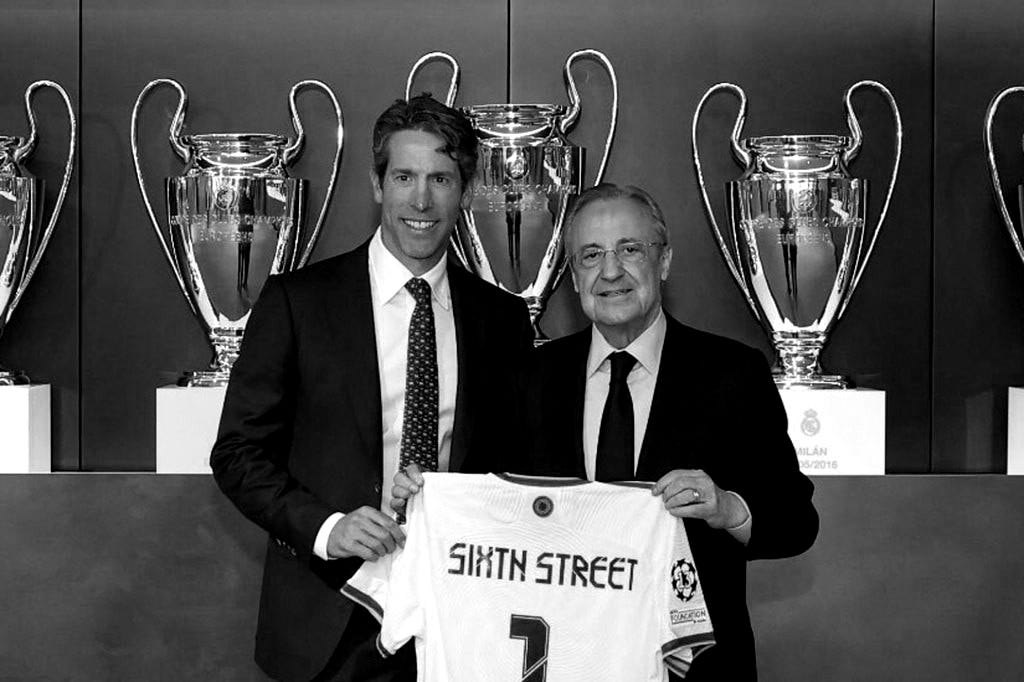
For all the good Sixth Street has accomplished, the firm still falls short of what SSG was. Their official title is Sixth Street Partners, an implied acronym of SSP - perhaps this was an intentional mistake given SSP is no SSG. SSG’s key asset, aside from the Goldman Sachs balance sheet, was their talent. The best people went to Goldman, and it took an even more intense persona to enjoy SSG’s unconventional grind. It’s the reason why Waxman joined and stayed until regulations forced him out. It’s the reason why Wharton undergraduates used to obsess over placing into either Blackstone or GS TMT or GS SSG. The brand attracted the talent, and that was it. Sixth Street, a very respectable private investment firm, has not penetrated that ceiling of rare air yet. Very few firms or groups are the first choices of the top students. Those firms inevitably become.
Where is SSG now?
In truth, the closest thing to OG SSG is Sixth Street. From Goldman’s perspective, however, the firm’s group of Navy SEALs still exists within their Alternatives division, after being rolled into their merchant banking division. While SSG technically survived, dodging the fate that put an end to the risk arb desk, the group has been merged with other groups, suffered brain drain at the highest level, and might be better off dead. As of 2019, they have opened doors to external investors.
Unlike the risk arbitrage desk of old, the legacy of SSG is still alive and well. Not just on Sixth Street, on Wall Street more broadly. Nearly every major opportunistic group has stolen a page from Goldman Sachs: the esteemed Blackstone equivalent is known as Tac Opps, launched in 2012. JP Morgan launched a Global Special Situations strategy in 2017, although it is yet to become one of JPM’s stronger groups. Morgan Stanley is in a similar boat with their Tactical Value team. Even venture outfits like Thrive ought to pay tribute. When you look around the Street and see the militaristic fund names and opportunistic mandates and small team sizes, remember where it came from. The knights refuse to make merry until the sun rises
I am no king, brother; rather, a stranger in my own household.
Though ocean separates us, pray that our prayers reach the king of battle.
For my hands have lost their steadiness.
My feet seek rest and find toil.
The force of my foes cause friends to forget my name.
The kingdom I inherit has become a liability.
Even the drunkards laugh at my state.
How much longer must I hold this rage hostage?
It has become like a fiery soldier in the fortress of my heart.
Make haste, send your choicest knights to quench the thirst of war.
Send your choicest knights to pierce alien bodies with spear or sword.
Only then will I wash my feet in enemy blood, the real Christian louboutin.
Take a swig of my chalice, let conviction dribble down your chin.
Black and red in my courts until the curtains dim.
Then it’s navy blue armor, King Baldwin, honorary crip