
Arb Melts
dead presidents and dead supers.

On May 23rd, 1910, Gus Levy was born to a lower-middle class Jewish family in New Orleans. In 1928, Levy’s widowed mother couldn’t afford his tuition at Tulane University any longer, so he packed his bags and headed east. Levy showed up to Wall Street unannounced, with just two dollars in his pocket. He eventually landed on his feet as a runner for a brokerage firm. Five years later, he found his way to Goldman Sachs, this time joining as a bond trader.
Gus Levy invented the field of risk arbitrage.
At first, it was as simple as buying bonds in one market and selling in an unconnected foreign market that priced the bonds at a premium. A bond that went for $70 on one market and $72 on another was free lunch to the man crafty enough to exploit information gaps. Levy was the best at this. By 1969, Levy became Goldman’s chairman and CEO, succeeding Sidney Weinberg. Over the years, Levy’s techniques became more complex: after WWII, he followed the reorganization proceedings of railroads that went under, buying up bonds of the ones that were determined whole in bankruptcy court. This form of arbitrage eventually evolved into merger arbitrage, buying securities to bet whether or not mergers would be successfully completed. As long as there were market inefficiencies, there were arbitrage opportunities, and Goldman would lead the pack under Levy.
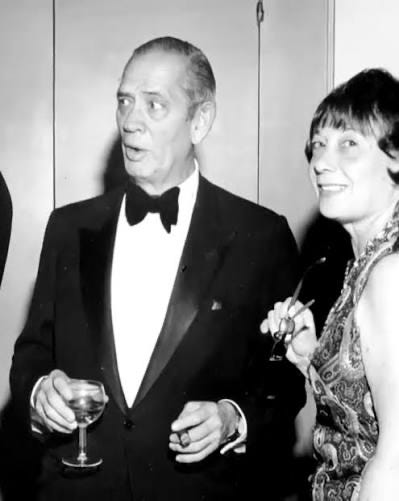
His leadership style wasn’t nearly as sophisticated as his investing methods. Gus was, by all accounts, a Wall Street caricature; his morning ritual consisted of burning cigars, his evening routine involved a healthy dose of martinis, and his day was laced with unpredictable outbursts at nearby employees. He would regularly fire everyone around him, to the point that traders who got fired would know to still show up the next day.
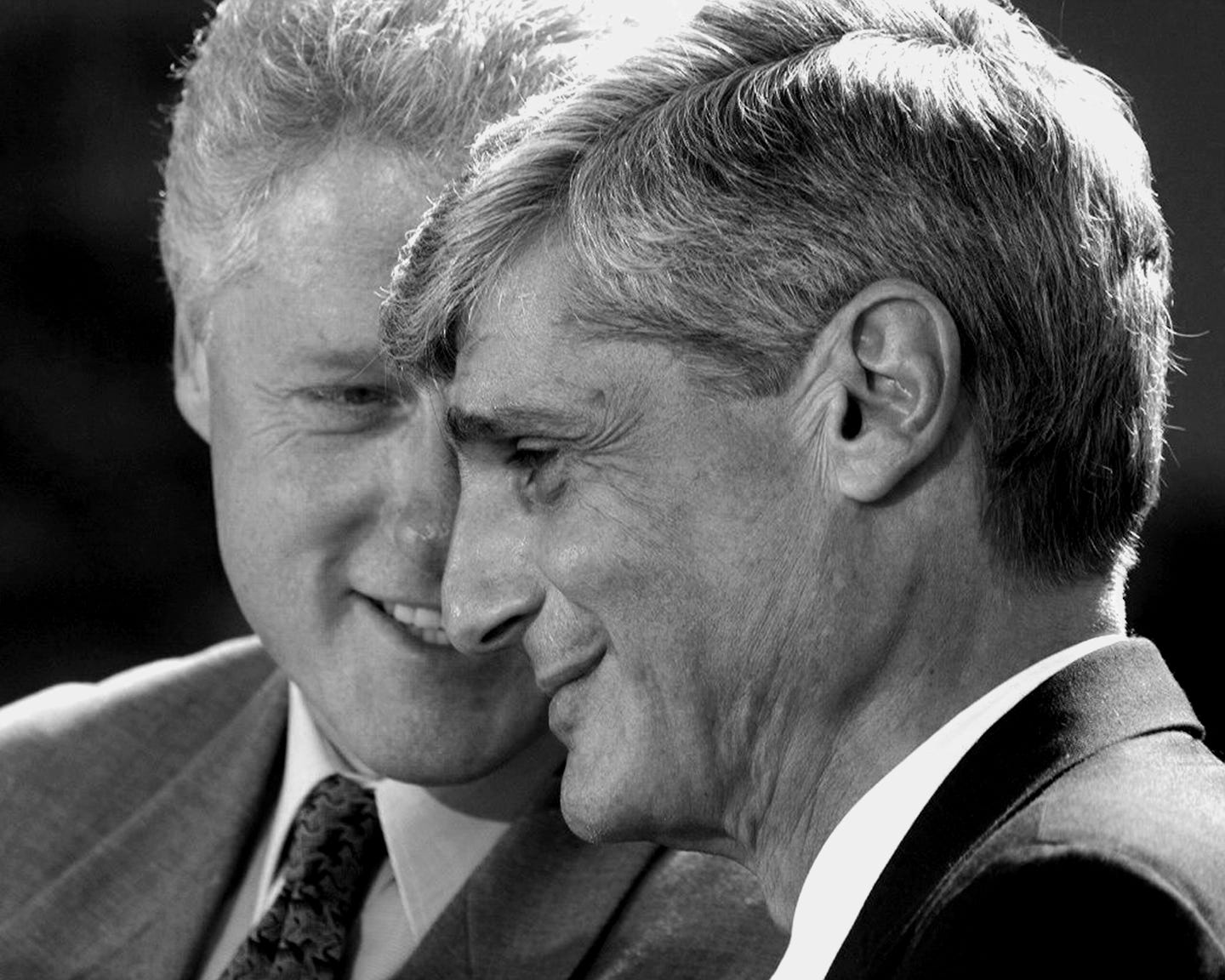
Levy’s protege, Robert Rubin, was the exact opposite. Rubin was a mild mannered gentleman, an academic that graduated from Harvard summa cum laude and attended both Yale Law School and London School of Economics. An attorney by trade, he first worked at Cleary, Gottlieb, Steen & Hamilton for two years before joining Goldman Sachs on the risk arbitrage desk. Rubin rarely raised his voice, ate healthy, and had a stoic demeanor. But his impact was just as loud as his mentor’s.
By the 1990s, risk arbitrage at Goldman was known as the “area where the very brightest people worked together,” according to Charley Ellis’s book on the firm. The desk was composed of less than twenty traders, yet sometimes generated up to twenty percent of the firm’s earnings, and offered an intellectual challenge that other groups could not. Risk arbitrageurs needed to understand balance sheets, antitrust law, statistical models, fixed income math, and risk management. If the market signaled an acquisition had a 70% chance of going through and the desk determined it was significantly higher, say 77%, the risk arb desk might go long on an especially undervalued security in the capital structure. They were the highest paid actuaries in the world.
The alumni who worked under Rubin went on to establish some of the most famous hedge funds in the world. Tom Steyer founded Farallon Capital Management, a $44B fund that briefly claimed the title of largest hedge fund in the world circa 2005. Steyer is now better known as a Democratic politician who ran for president of the U.S. and governor of California. Richard Perry founded Perry Capital, a fund that specialized in merger arbitrage and event driven investing. Perry Capital peaked at $15B AUM in 2007. After assets fell from $10B to $6.4B in 2016, the firm shuttered its flagship fund. Eric Mindich founded Eton Park in 2004, the largest hedge fund launch of its time, coming to market with a gargantuan $3.5B. The fund peaked at $10B and eventually shut down in 2017 after incurring a 10% loss in 2016. Mindich was previously a risk arbitrage star at Goldman, earning the title of youngest partner ever. He was 27 at the time of promotion. Eddie Lampert founded ESL, grew to $15B AUM, then fell to <$1B AUM after a messy deal with Sears and investor withdrawals. Daniel Och founded Och-Ziff, a hedge fund that managed $50B AUM in its prime before an African bribery scandal that forced them to pay $400M to the SEC. The firm rebranded to Sculptor Capital Management, experienced AUM decline, and eventually got acquired by Rithm Capital.
For a risk arbitrageur, the market is a machine. Goldman’s finest managed to craftily dismantle its weak points on the biggest stages, which subsequently unlocked support from institutional investors. As time elapsed, the machine became more efficient, the old trades became crowded with new faces, and hedge fund superheroes started employing forbidden tactics in hopes of tasting arbitrage alpha one last time. The machine, like an Omnidroid in The Incredibles, eventually ravaged the heroes who refused to retire gracefully.

Goldman Sachs’ risk arbitrage desk shut down in 2001.
Its legacy, once proudly carried by alumni managing billions, is dead as well.
Arbitrage melts.
There are very few yet important constraints to the progress of large language models as it stands; namely, power and data. Power can theoretically be solved with more sprawling datacenters, increasingly powerful chips, and energy efficiency. The amount of capital it takes to construct a solution for power is astronomical. Founders ought to be able to access billions on command to even stand a chance. On the other end, data is accessible. The largest labs - OpenAI and Anthropic - along with select challengers, have an incredible market inefficiency that savvy Silicon wunderkinds are looking to exploit, much like Gus Levy in the 1960s. The labs have unlimited access to capital and very limited access to the data they need the most: specialized internal data from businesses and knowledge workers. In order for the models and agents to progress past their current state, complex reasoning tasks and multimodal data from knowledge workers and businesses is a critical unlock. And it does not take nearly as much capital to engineer a large outcome.
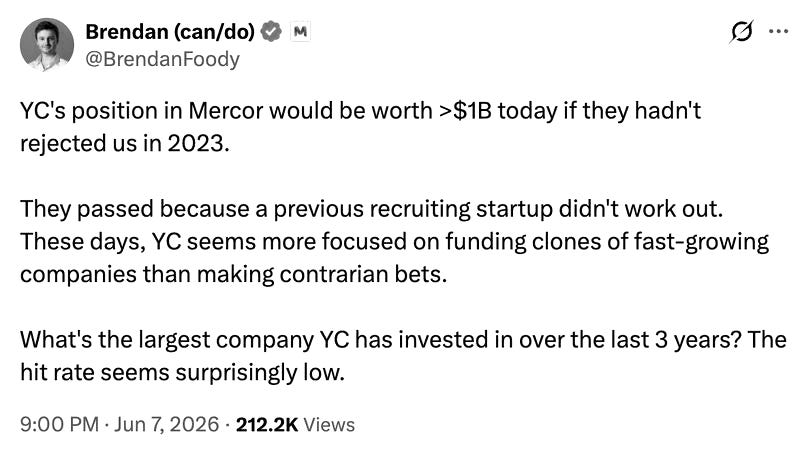
The largest player right now is Mercor, a $20B marketplace that supplies AI labs with white collar workers so that models can get specialized training from experts. The labs pay a premium for access for expert reasoning and Mercor takes a 30% rake, leaving lawyers, investment bankers, and PhDs with the remaining cash, typically a higher salary per hour than the individual’s day job. Other startups, each employing their own variant of this model, include Scale AI, micro1, Surge AI, AfterQuery, Turing, and others.
Mercor
Valuation: $20B
Revenue: ~$2B+ ARR
Key Investors: Benchmark, Felicis
Overview: Two-sided marketplace, connects professionals to AI foundation model companies and takes ~30%. Mercor uses AI to help vet and interview experts, then uses an algorithm to match the experts to the right AI labs. Founded in 2023 by Georgetown and Harvard dropouts, Brendan Foody, Adarsh Hiremath, and Surya Midha.
Micro1
Valuation: $4B
Revenue: ~$400M ARR (as of Q2 2026)
Key Investors: 01 Advisors, Dream Ventures
Overview: Pays experts directly to complete work on platform, bills customers (AI labs, enterprise, robotics companies) per task or per hourly consumption. Key customers include OpenAI, Meta, xAI, Deepmind, Microsoft. Revenue has grown 3x since the end of 2025, and 50x+ since the beginning of 2025. One of the most capital efficient players, along with Surge AI.
AfterQuery
Valuation: $300M
Revenue: ~$100M (as of Q1 2026)
Key Investors: Altos Ventures, Y-Combinator
Overview: Partners with experts to produce high-quality, human generated datasets and reinforcement learning environments for AI labs. Pays doctors, software engineers, investment bankers, PhDs up to $250 / hour for highly complex work.
Other Notable Players: Scale AI, Surge AI, Turing
In one case, a company listed above was rumored to have offered $100,000+ for a small company’s dataset, with the intention of selling said data to OpenAI / Anthropic for no less than $700,000. The dataset was from a failing company that likely would have sold it for less than $100,000.
There are early stage startups in the Bay Area that make tens, hundreds, and thousands of millions from buying data and then selling it to the highest bidding AI lab.
We’ve raised $9M, and frontier AI labs use us to make their models smarter. We pay companies for examples of how their work gets done, and we pay you for the intro.
One might question how protected these companies are from disruption, considering the wide spread captured by platforms. Markets only get more efficient over time, and there is reason to believe that in five years, a 30% rake will be whittled down to <10%. For companies that buy and sell at 3-7x multiples, a well-funded competitor offering market transparency and a Goldman-esque 5% fee would, theoretically, attract more market participants over time. Competition, market transparency, and new AI leaders could all compress spreads.
It would be intellectually dishonest to label the AI data marketplaces as absolute arbitrage. There is plenty of challenging work involved in cleaning data in-house, establishing relationships with said labs, building the required legal, compliance, and security infrastructure, building the expert network, et cetera. But Anthropic just launched a feature to record users performing tasks in real time. Other players are emerging from stealth with the goal of reducing the spread, and returning value to the businesses or individuals doing the expert work. I wouldn’t be surprised if investors start spinning up private funds to acquire datasets and flip them to labs. All of that to say the same thing that was said earlier: it is only a matter of time before the arb melts.
Alas, free lunch ought to be savored while it’s still hot.