
7 Seconds or Less, Part II: Dijon Thompson Takes on the Startup World
The former NBA forward played on one of the most electrifying teams ever. Now he’s feeling that same adrenaline again in startups.
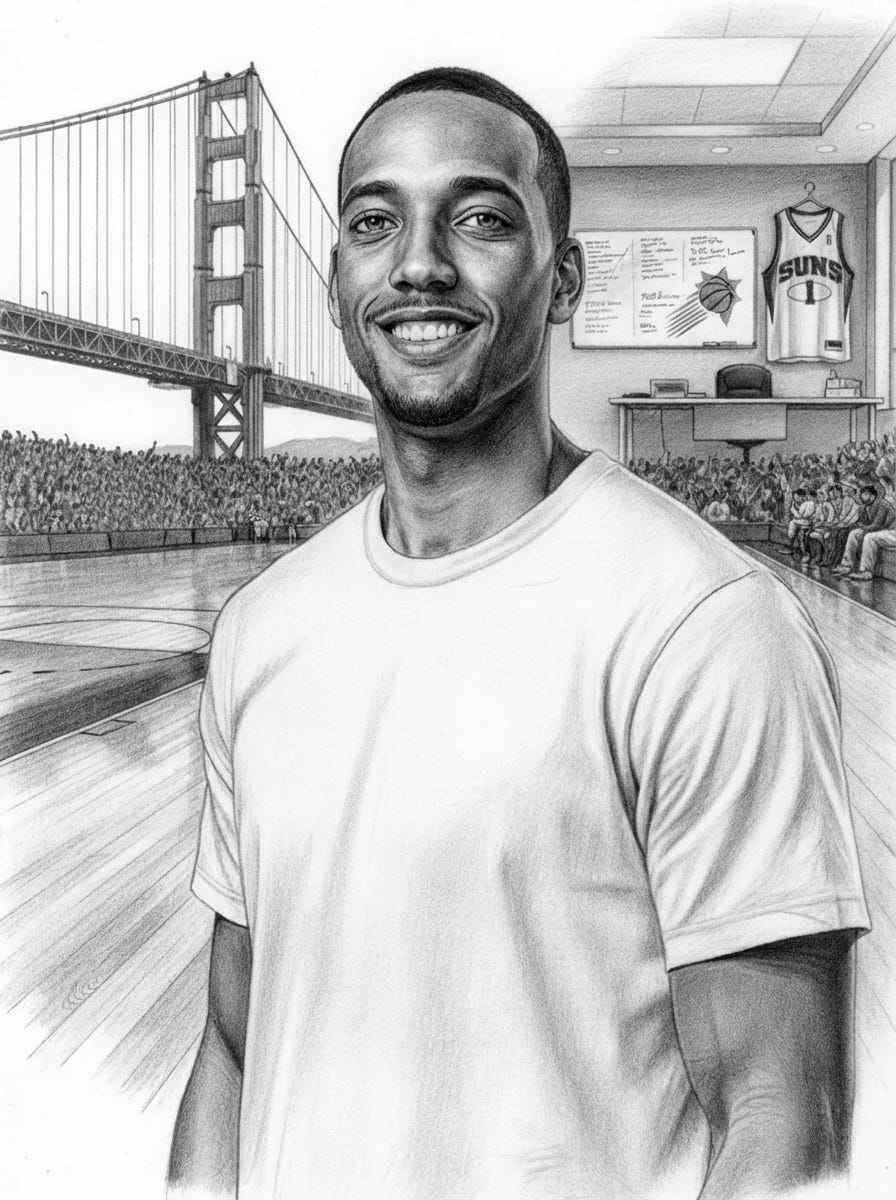
I knew I was in for a ride the moment Dijon Thompson leaned back in his chair, grinned, and said:
“My first startup experience felt like my first Suns practice.”
That’s when it clicked.
The 2005-2006 Phoenix Suns weren’t just a typical basketball team.
They played like a scrappy garage band crashing Carnegie Hall - breaking rules, ignoring the sheet music, and somehow leaving everyone cheering anyway.
And here I was, sitting across from a member of that legendary team, hearing he’d found that same adrenaline again.
After leaving basketball, he made a bold pivot to the tech world, and quickly found himself immersed in something that felt eerily familiar.
The same energy, pace, and rule-breaking philosophy that made the Suns a religion…
Turns out, he’s back in it - only this time, it’s startups.
Pace Over Perfection
As I was talking to Dijon, it hit me: the 2005-2006 Phoenix Suns were basically the OG YC batch before YC was cool.
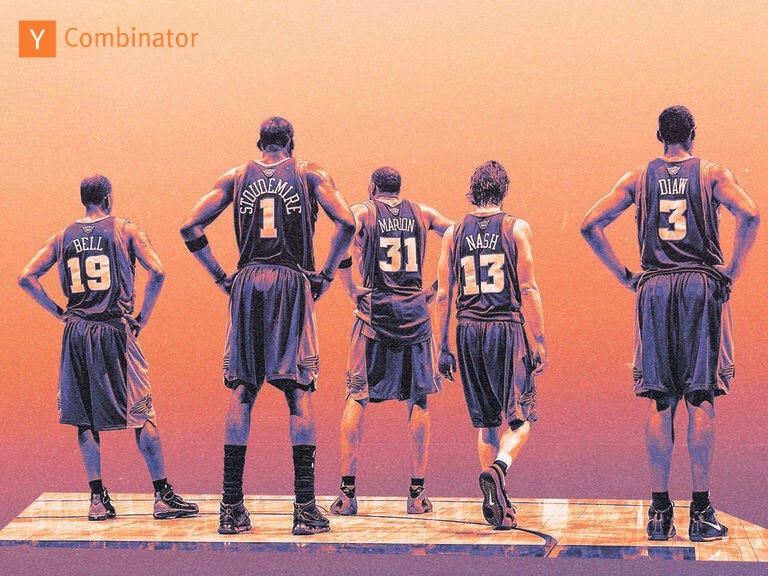
Most NBA teams in the mid-2000s lived and died by structure. The triangle demanded patience. Horns sets required precise spacing. Everything was about controlling pace.
The Suns rewrote the rules. Push the pace. Shoot early. Score in seven seconds or less. (Yes, you read that right.)
It was organized anarchy - the kind of basketball that looked like Mario Kart on hardwood.
Fresh out of college, Dijon was dropped into this system. He’d been drafted by the Knicks, traded to the Suns, and there he was - practicing with Nash, Marion, and Stoudemire in a system that saw D’Antoni turn speed into a weapon.
They won 54 games that year, and Dijon was caught up in that frenetic energy.
“I just had a feeling we were going to win the championship,” he told me.
Then came the gut punch. Not a slump. Not a bad stretch. A full stop.
His knee gave out mid-season. Microfracture surgery. The same procedure that nearly ended Stoudemire’s career. Except Stoudemire had already secured a multi-million dollar contract. Dijon hadn’t.
He was 22 years old. No guaranteed money. No fallback plan. Just a surgically repaired knee and a slim hope he’d ever play professional basketball again.
Highest high. Lowest low. Just months apart.

Fast-forward to 2020. Dijon’s retired after a career that took him across France, Germany, Russia, Ukraine, Vietnam, and Japan.
Then, out of nowhere, Dijon ran into an old friend at cryotherapy. She kept recruiting him to join her startup.
The pitch was wild. Pre-revenue. Small team. Competing against billion-dollar tech giants.
“Don’t worry, you don’t have to know tech. We’ll teach you.”
With zero tech experience and no clue what he was getting into, he said yes.
And boom. Déjà vu.
Sales hyped features that were still three sprints away. Founders tweaked the pitch deck 15 minutes before a meeting. Product shipped with bugs everyone knew about. (Sound familiar, founders?)
At YC, they call this “building the plane while flying it.”
“I realized fast that if you wait for the perfect plan, you’ll always be a step behind,” Dijon told me. “On the Suns, we moved before the play fully formed. In startups, it’s the same.”
Once you’ve played at that speed, everything else feels slow, and slow starts to feel wrong.
Speed isn’t just a style - it’s a strategy. The faster team forces everyone else to react.
This was Phoenix all over again, just in a different arena.
Positionless
In Phoenix, your listed position was basically a formality for the stat sheets.

Marion guarded 1-5. Diaw played center, point forward, and part-time magician. Dijon played the 2, the 3, and even stretch 4 when the system demanded.
You didn’t fit the system. The system stretched around you.
So when Dijon joined his first startup, he already knew the playbook. Partnerships, biz dev, fundraising, product… whatever the team needed, he jumped in.
The Suns taught him to be positionless. Startups don’t just reward that - they demand it. If you need a job description to be useful, you’re already behind.
He laughed when I asked how many hats he’s wearing these days.
“Sometimes I wear more hats than Boris Diaw in a playoff series.” (Trust me, that’s a lot of hats.)
The Suns exploited something most teams overlooked at the time: athletes thrive in ambiguity. New teams. New coaches. New roles. And sometimes even new countries.
“You know, we spend our entire careers moving around and learning to adapt,” he told me. “It’s the same muscle startups need.”
That line stuck with me. Dijon figured this out earlier than most athletes, and turned adaptability into his superpower.
The Nash Effect
There’s one person who made that Suns system click. That person was Steve Nash.
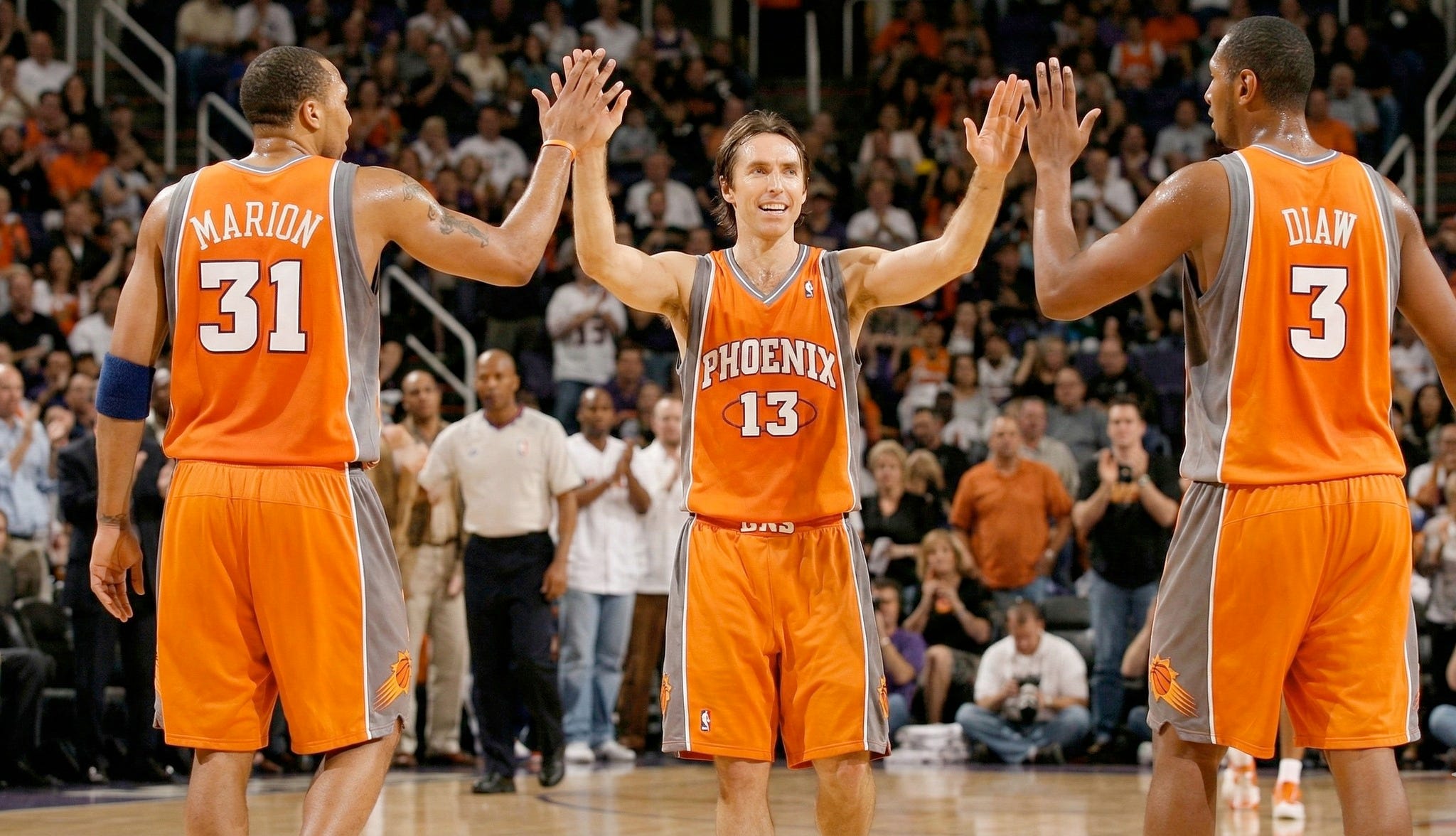
Nash didn’t just bring the ball up the court. He saw angles two steps ahead, turned chaos into choreography, and most importantly, amplified everyone around him.
Every startup needs a floor general. Or, as Dijon puts it:
“Every startup needs a Nash.”
Dijon has learned to spot that same floor-general energy in the founders he works with.
Take Paige at Powered by Point. She saw something in him before he saw it himself and put him in a position to contribute. She also teamed up with her cofounder to level him up. Pitch deck breakdowns, UX debates, post-mortems on growth experiments, even a deep dive into consumer psychology using the GameStop fiasco as the syllabus… Dijon absorbed it all. It was like watching game film.
Now he’s seeing it again at Cache AI. Kobi, the founder, has the rare ability to read the market, pivot on the fly, and keep the team moving in perfect sync. She has a knack for putting people in the right spots - looping Dijon into key conversations, trusting him to run with opportunities, and turning small openings into real partnerships. Under her guidance, he’s gone from learning the ropes to helping land a growing slate of partnerships.
Great founders, like great floor generals, make everyone else better. Dijon learned that lesson from Nash. Now he watches for it in every founder he works with.
Seven Seconds Or Less, Cont.
When I first sat down with Dijon, I thought I was talking to a retired hooper.
By the end, it was clear he hadn’t left seven-seconds-or-less behind. He’d taken that philosophy off the court and into startups.
Move fast. Take risks. Break rules.
The Suns planted the seeds. Startups made them grow.
Dijon didn’t just find a second act. He found the same adrenaline, rhythm, and joyful chaos. Only now, it runs 24/7.
As we wrapped up, he leaned forward with that same grin from the beginning of our conversation:
“Most athletes don’t realize they’re already trained for this. I didn’t either, until Ryan Nece at Next Legacy Partners, told me: the most dangerous thing is an athlete knowing he can compete in another arena.”
He’s right. One pivot is all it takes for an athlete to become a killer startup operator. Once that pivot happens? Watch out, world.
Follow Dijon's journey on LinkedIn and check out how he brings that same Suns-style pace to Cache AI, where he helps athletes and teams make sense of NIL valuations using AI.
Check out more stories here:

