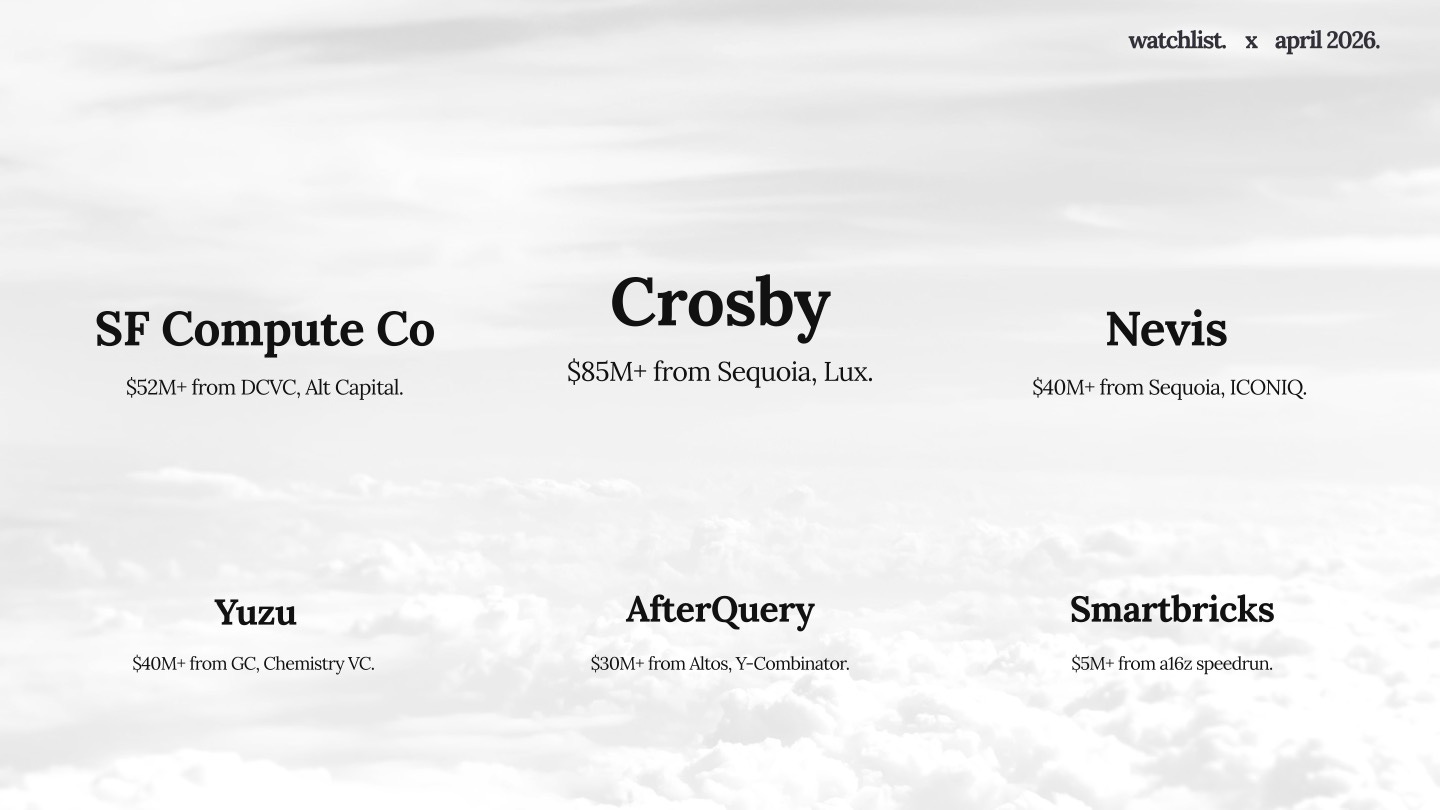
Watchlist: April 2026 Edition.
we just gave the market life.

“I just gave the city life. It ain’t about who did it first, it’s about who did it right.”
Drake, Wu-Tang Forever
MySpace then Facebook, Blackberry then iPhone, Blockbuster then Netflix, Napster then Spotify.
The list could go on forever. For every example of first mover advantage, there exists a parallel instance of second movers stealing the spotlight. Being first is only advantageous when a competitor correctly identifies the high ground in an arena, and sets up barriers to protect then compound the advantage.
One of these great corporate battles is taking place in real-time: OpenAI versus Anthropic. While OpenAI came first, Anthropic has made a series of calculated decisions that allowed Dario Amodei and his troops to capture the enterprise market and induce panic in OpenAI’s heart. Now there are a number of outstanding questions that will determine who wins. For instance, which is more important in the AI market, the consumer or the enterprise? Will OpenAI’s compute advantage materialize in the medium term? If scaling laws hit a wall, does Anthropic have the upper hand? Is it easier to go from enterprise to consumer or the other way around? You could spend an entire week debating the merits and still not have an exact answer. For now, Anthropic has closed the gap, and investors are allocating accordingly.
On a smaller scale within the artificial intelligence domain, another war is being waged.
Legal software, headlined by Harvey, versus AI-law firms, also known as “neofirms”, headlined by Crosby.
Harvey is an $11B startup that raised money from Sequoia, Coatue, a16z, and Kleiner Perkins to run AI legal workflows. Harvey is used by the majority of AmLaw100, over 500 in-house legal teams, and 50 asset management firms across 60 countries; a total of 100,000 lawyers across 1,300 organizations. They reached over $190M in annualized revenue at the end of 2025. Harvey co-founder Winston Weinberg was working at O’Melveny & Myers and Gabe Pereyra, his co-founder, was working at Meta. When GPT-3 came out, the two friends tried to do chain-of-thought prompting on California landlord-tenant statutes, took 100 questions on the topic from Reddit, ran the AI prompt, and gave the question-answer pairs to a few landlord-tenant lawyers. The lawyers said that 86 of the 100 questions were perfect answers, no edits needed. On July 4th, 2022, the duo pitched OpenAI’s executive team and got their first investment. The rest is history.
Crosby is a $400M startup, an AI native law firm that reviews and redlines contracts in under an hour, pairing large language models (LLMs) with in-house lawyers who take on direct liability for their work. In the past year, Crosby has grown from 0 to 100 customers and processed tens of thousands of contracts. They raised $26M from Sequoia, Bain Capital Ventures and Elad Gil in both seed and Series A funding, before raising $60M last month in a Series B led by Lux Capital and Index Ventures, at a $400M post-money valuation. Lux’s Grace Isford wrote in a LinkedIn post that “what convinced us what when Crosby publicly launched last year and our portfolio companies were clamoring to use the product. By the time they signed their third Lux portfolio company and were recruiting some of the best talent in NYC, we’d seen enough.”

The tension between Harvey and Crosby is about strategy precision; it’s less about one being right and the other being wrong, and more about who is more right or who is less wrong. Harvey’s two year headstart has proved fruitful in signing law firms, but critics are quick to note that their tech is built on a foundation of sand, or more precisely, OpenAI’s foundation models. They are, in some sense, renting today’s revenue, an expensive gamble. Crosby is going after a fundamentally different customer and has fundamentally different unit economics. Crosby sells directly to startups (Ramp, Cursor) and enterprise (Tishman Speyer, Starwood), charges on the basis of work rather than billable hours and is designed to process large volumes of contracts quickly. They hire lawyers in addition to engineers. The Crosby thesis is that traditional firms bill by the hour, don’t optimize for long term equity value, and distribute profits to partners rather than re-invest, which leads to a lack of innovation. For context, America’s top 100 law firms made a combined $69B in profits through 2025, which was larger than Google’s R&D budget ($62B). Crosby is positioning itself to take advantage of improvements to artificial intelligence by pairing lawyers with AI engineers, charging customers for outcomes rather than billable hours, and re-investing into innovation for long term value creation. The primary customer at this stage is a well-funded startup; Cursor, Clay, Listen Labs are all paying Crosby to get their legal work done in a timely and cost-efficient manner. As more customers send more legal work to Crosby, the company’s technology systems get smarter, work gets done faster and more accurately, and the lawyers theoretically deliver a better product to clients that incumbent firms can. The bull case for Crosby relies on a number of probable assumptions, but perhaps the two most important assumptions being made are that (a) artificial intelligence improve significantly over time and (b) they can expand from their wedge (NDAs, MSAs, DPAs for high growth startups) into more complex upmarket work. As of right now, Harvey’s position is much stronger given their revenue scale, while Crosby is simply more interesting.
The 100th largest law firm in America by revenue did $697M in 2025 while employing 1,025 lawyers. If Crosby can creep anywhere near the incumbents, their valuation would warrant a much higher multiple given the fast growth and tech-enabled narrative. That day is still many years away from coming to fruition.
After less than two years of operations, Crosby is headlining today’s edition of Watchlist.
In the next two years, expect their price to increase tenfold.
The San Francisco Compute Company
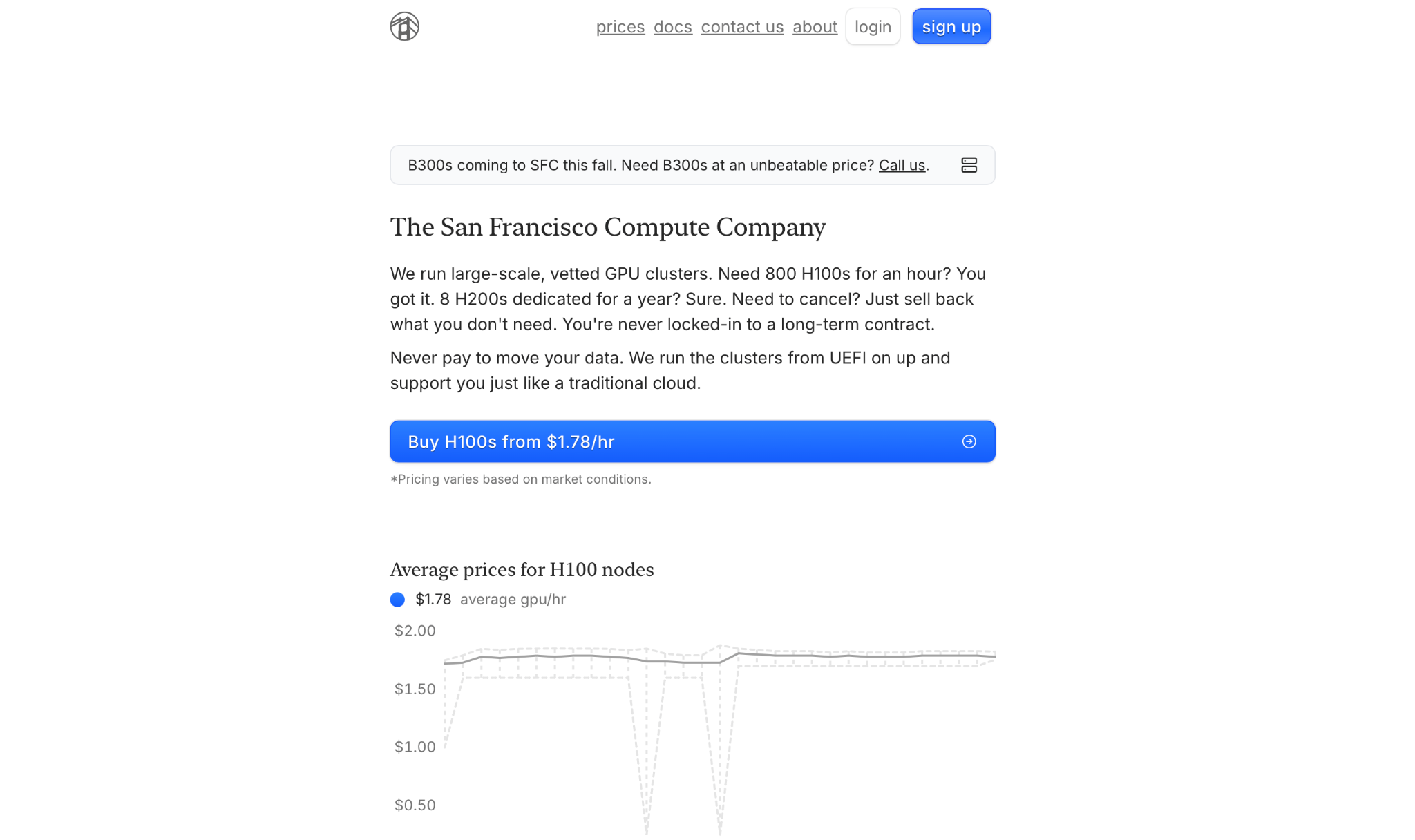
Company Overview: The SF Compute Company is a marketplace for compute that allows companies to buy GPU/compute capacity on flexible, short-term contracts while enabling data centers and enterprises to sell excess capacity. Their $40M Series A round was led by DCVC and Wing, and their seed round was led by Alt Capital. Their post-money valuation following the Series A in late November 2025 was $300M.
Founders: Evan Conrad - co-founder and CEO of The SF Compute Company, Gonzaga graduate, Y-Combinator Summer 2019 (Quirk); Ethan Anderson - co-founder and COO of The SF Compute Company, Rhode Island School of Design graduate, Y-Combinator Summer 2019 (Fynn)
Investors: DCVC, Alt Capital (acq. by Benchmark)
Amount Raised: $52M+ (Series A stage)
Headquarters: San Francisco, CA
Nevis
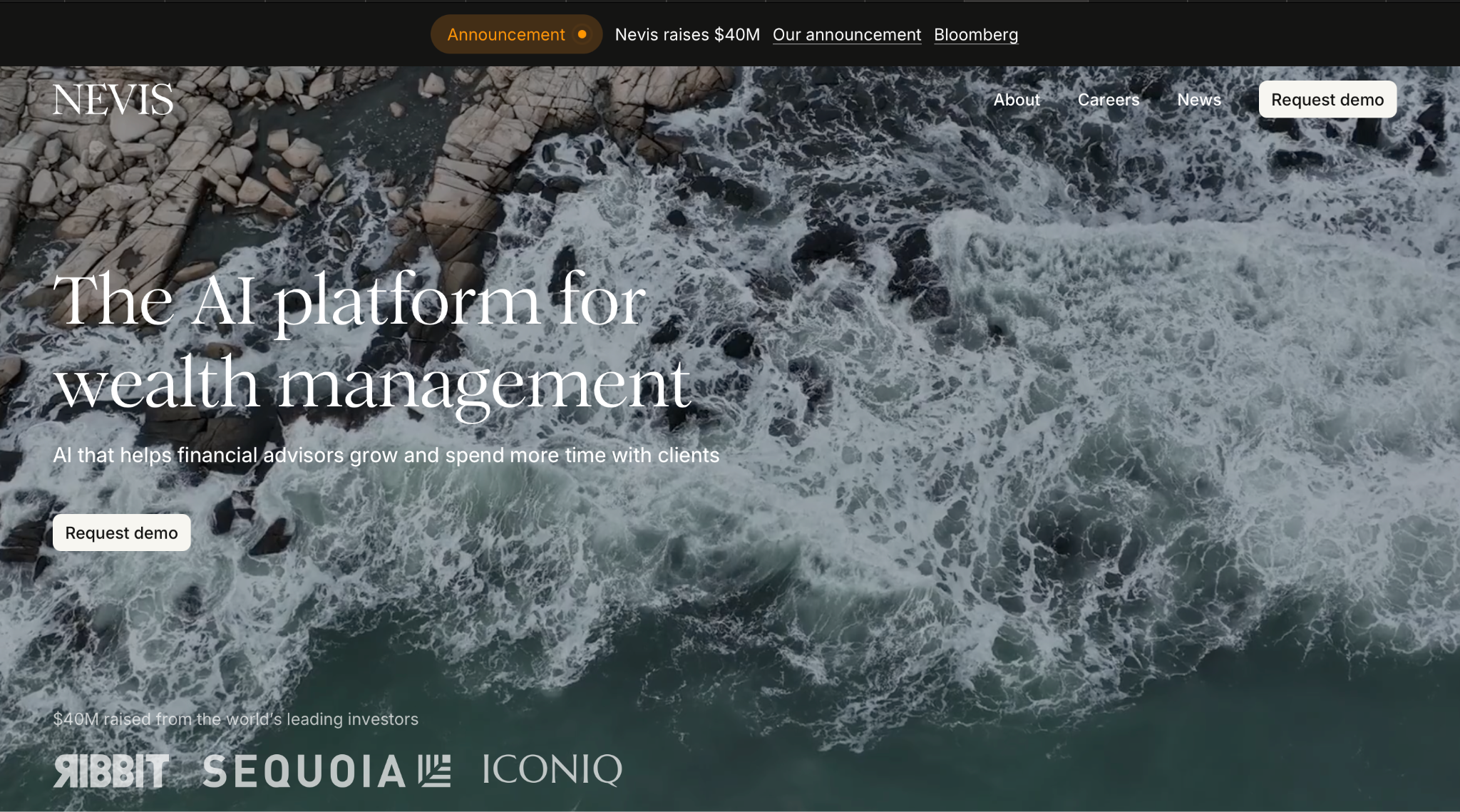
Company Overview: Nevis is a unified AI platform for wealth management. They help advisors complete operational work end to end, including meeting preparation, client follow-ups, account openings, and ongoing service. Nevis supports advisors that manage more than $50B in assets. The company raised a $35M Series A from Ribbit, Sequoia, and Iconiq.
Founders: Mark Swan - co-founder and CEO of Nevis, University of Edinburgh graduate, ex-Revolut; Ivan Chalov - co-founder and COO of Nevis, Novosibirsk State University graduate, ex-Revolut, ex-Deutsche Bank
Investors: Sequoia, Ribbit, Iconiq
Amount Raised: $40M+ (Series A stage)
Headquarters: New York, NY
AfterQuery
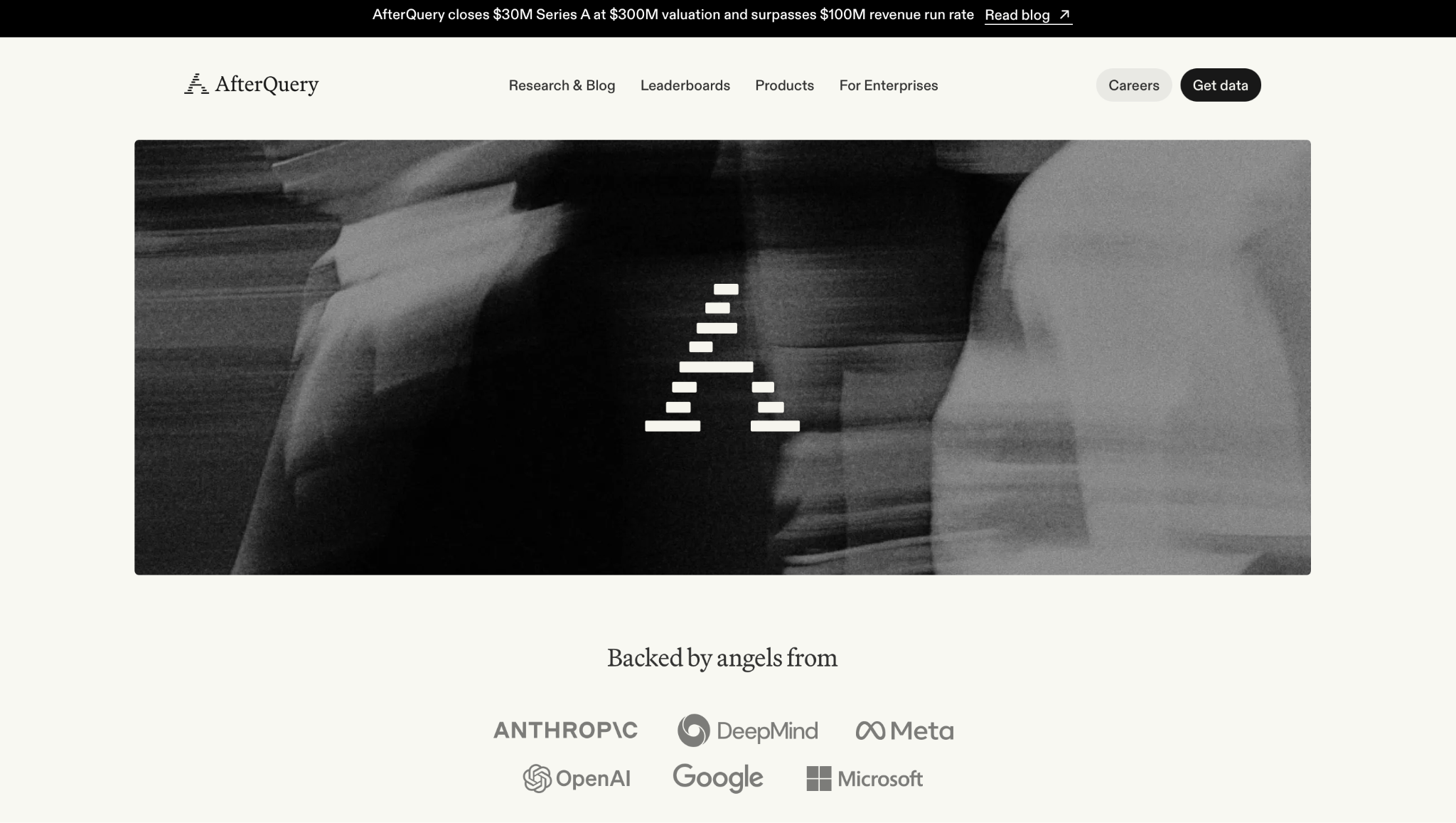
Company Overview: AfterQuery is a research lab that delivers datasets and reinforcement learning environments to top AI labs. They work with subject matter experts to translate human knowledge into reasoning for artificial intelligence systems, similar to Mercor ($10B valuation). The difference is, AfterQuery is focused on judgement density and producing frontier data in finance and coding, while Mercor is higher volume and automates the hiring of professionals to train models. The company surpassed $100M in annualized run rate a month ago, and is in line for a high-end Series B round soon.
Founders: Spencer Mateega - co-founder and CEO of AfterQuery, ex-Silver Lake, ex-Morgan Stanley, Wharton graduate, Y-Combinator Winter 2025; Carlos Georgescu - co-founder and CTO of AfterQuery, ex-Meta, ex-Citadel, University of British Columbia graduate, Y-Combinator Winter 2025
Investors: Altos Ventures, Y-Combinator
Amount Raised: $30M+ (Series A stage)
Headquarters: San Francisco, CA
Yuzu

Company Overview: Yuzu is a healthcare tech company that provides a third party administrator platform for businesses to create and manage their own health plans. Their ultimate goal is to drastically decrease the amount of time and cost of processing a health insurance claim, which is currently around 30 days. The company raised a $35M Series A led by General Catalyst and Chemistry VC, and their company headcount is around 52.
Founders: Max Kauderer - co-founder and CEO of Yuzu, ex-Bain, ex-Capital One, Haverford College graduate; Ryan Lee - co-founder of Yuzu, former product engineer at Lithic, Harvard College graduate
Investors: General Catalyst, Chemistry VC
Amount Raised: $40M+ (Series A stage)
Headquarters: New York, NY
SmartBricks
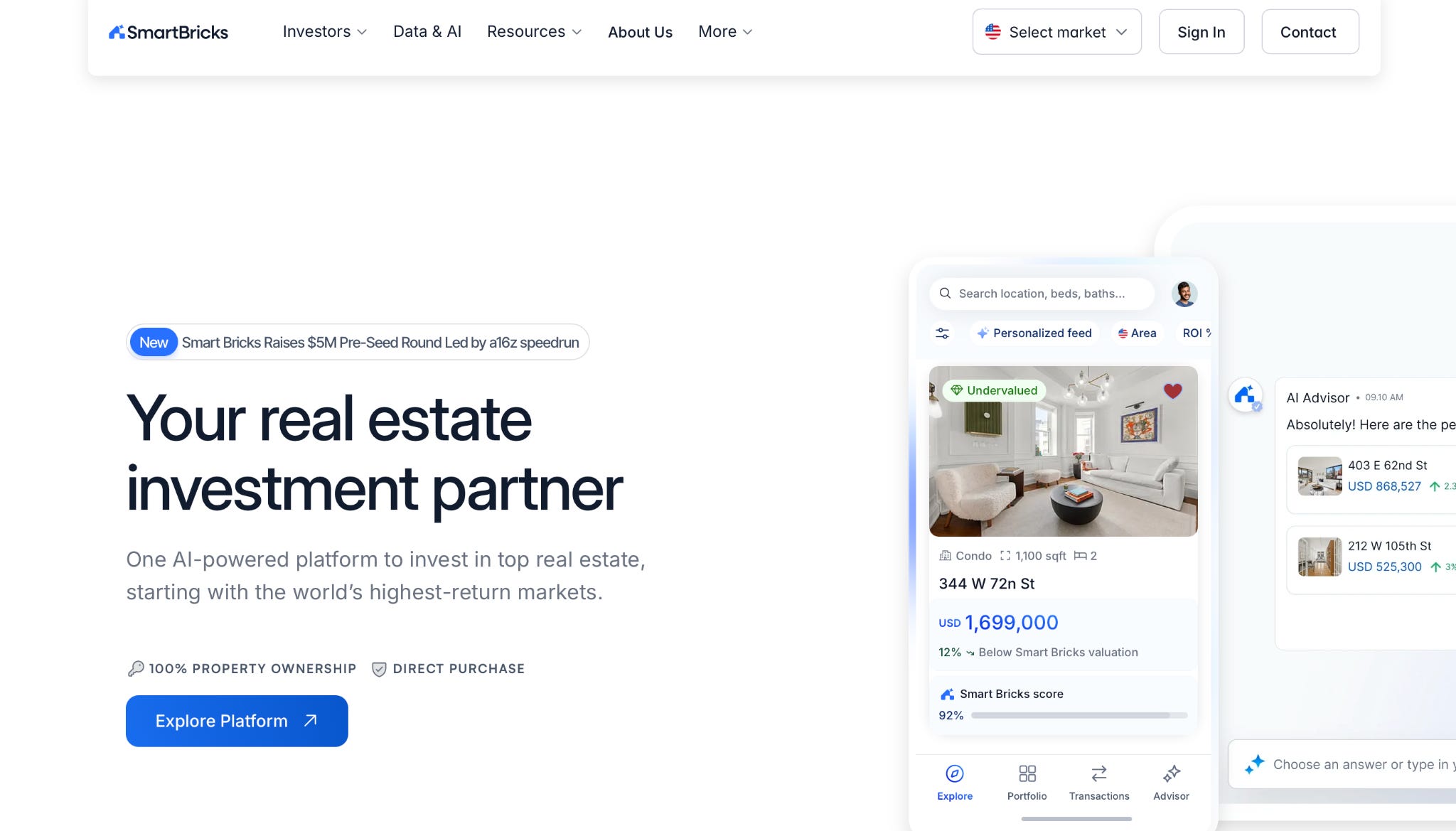
Company Overview: SmartBricks is an AI-powered real estate platform that provides a comprehensive intelligence layer for global real estate investing. The company built autonomous deal agents, underwriting agents, execution agents, and portfolio intelligence agents to increase ROI for real estate investors. After raising a $5M pre-seed round led by a16z speedrun, SmartBricks reached $12M in annualized run-rate revenue.
Founders: Mohamed Mohamed - founder and CEO of SmartBricks, ex-McKinsey, ex-Bain, University of Warwick graduate, London Business School MBA
Investors: a16z speedrun, 500 Global
Amount Raised: $5M+ (seed stage)
Headquarters: San Francisco, CA