$200B+ of venture capital gets deployed in the U.S. on an annual basis.
That’s enough money to buy every NBA team and have lunch money leftover.
Despite this, startup media coverage is fragmented and low signal.
Our thesis is that, over time, startup media coverage will start to resemble sports media coverage.
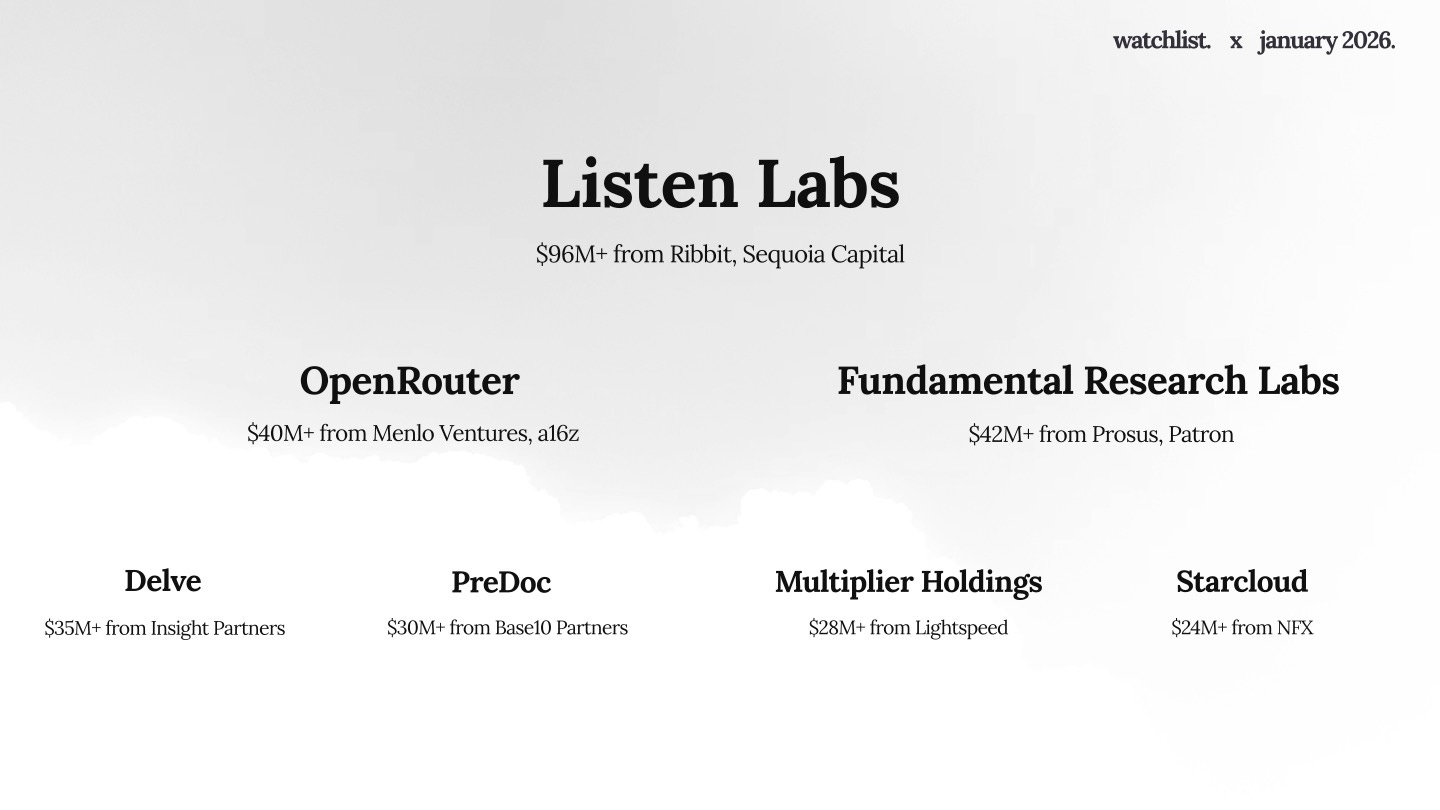
Watchlist is a new mainstreet media vertical that covers the soon to be superstars: early standouts from the Series A stage, with the occasional super senior (Series B) and sensational freshman (seed).
On a monthly basis, we will release our picks on the top 7 to 10 unicorn prospects to keep an eye on.
At the end of the year, we will review the picks.
If you think we missed a startup, reply in the comments or shoot us a note at info@themainstreetfund.com.
You do not know your customer.
You only know yourself.
So build accordingly.
Some variation of this maxim has been regurgitated by countless artists, founders, and creatives.
August Wilson said, “I don’t write for a particular audience… I have to satisfy myself as an artist. So I always say that I write for the same people that Picasso painted for. I think he painted for himself.”
Steve Jobs said, “We think the Mac will sell zillions, but we didn’t build the Mac for anybody else. We built it for ourselves… We just wanted to build the best thing we could build.”
But Paul Graham might have said it best: “‘Make something people want’ includes ‘make something you want.’ In fact, that’s often the best way to start. The most successful startups generally begin by the founders building something they themselves want.”
Building for yourself is the only way to ensure that you are building something that someone will enjoy. You cannot enter into the minds and hearts of other people and experience the emotions they feel when they see a work of art or use a new tech gadget or watch an advertisement. But you can make things you know you like and continue to do so until other people start to like it as well. In some sense, building for yourself is an American ideal; it is a permissionless pursuit that mirrors what the founding fathers did when the British system no longer worked for them. It is wonderfully childish, like a preschooler abandoning his teacher’s instructions and coloring outside the lines to his own delight, yet utterly serious, like Michelangelo striking the chisel with his hammer, steadily carving away into marble until King David emerges from the stone.
Building for yourself is selfless.

At some point in every successful company’s life, the incentives shift to reward building for others instead. But doing so is an extraordinarily difficult task, because it is not enough to know who the audience is or what their desires are. You must know everything about them, a task impossible for mortal man. This is why large companies often seem out of touch with their consumers, delivering products no one asked for and making public statements that disgust their core fans.
What if you could know exactly what your customers want?
Customer research is a $50B+ industry.
Fortune 500 companies spend tens or even hundreds of millions per year on customer research.
Firms like Gartner ($16B+ market cap), Nielsen ($16B acquisition, 2022), Qualtrics ($12.5B acquisition, 2023) and Ipsos ($1.5B+ market cap), make billions of dollars selling quantitative and qualitative insights from focus groups, interviews, and surveys. Even though the process is slow, outdated, and oftentimes, inaccurate, an obvious need for customer insights exists within the global economy. Firms ranging from publicly traded fashion brands to private B2B companies to entire governments pay Gartner, Nielsen, and Ipsos for anything that can help ease the pain of not knowing.
Listen Labs raised $100M to make customer research fun.
The company, founded by Florian Juengermann and Alfred Wahlforss, is an AI-powered customer research platform that automates the process of conducting and analyzing qualitative interviews. Listen uses artificial intelligence to design interviews, source participants from a large pool, conduct video and voice interviews at scale, and then analyze the responses to generate reports, themes, and presentations. The end-to-end automation enables businesses to get customer insights in hours rather than weeks.

The company started when Florian and Alfred teamed up to build an image generating app named BeFake (a play on then viral app BeReal). Florian and Alfred met while doing a Masters program at Harvard. In 2023, BeFake erupted, and the app saw 20,000 downloads in a single day. The founders were caught off guard, and the cost of hosting the app - namely the GPU costs for AI functionality - put a dent in their personal credit card balances. They needed to figure out a way to know what customers wanted, deliver it at a high level, and monetize it. So Florian and Alfred scrambled to conduct customer research as quickly as possible. Midway through the process, it became obvious that traditional user interview methods would not suffice. This is when they had an epiphany: what if we could use LLMs to speak to every single one of our customers and then summarize what they care about? The minimum viable prototype was promising enough for the duo to abandon BeFake and pursue a new dream - Listen Labs - that same year, 2023. Ironically, the startup that makes money from allowing companies to listen to customers came to fruition because the founders built something for themselves; the tool they created to solve their most painful problem ended up being extremely valuable to countless deep pocketed corporations.
Why now? The technology had just caught up. On March 14, 2023, OpenAI released GPT-4, and API availability was released in July 2023. There are a couple of major improvements from GPT-3.5 that allowed GPT-4 to conduct customer interviews efficiently:
Context Window: GPT-4’s context window is roughly 8x larger than GPT-3.5’s; the newer model could process an entire interview transcript in one take, analyze multiple customer surveys simultaneously, and maintain memory and context throughout longer customer interviews.
Multimodal Capacity: GPT-4 accepts both text and image prompts, such as charts, graphs, screenshots, etc., which is critical to analyzing customer feedback. GPT-3.5 was primarily a text-to-text model.
Multilingual Improvements: GPT-4 reads and writes in 26 languages, including low-resource languages like Welsh and Swahili, making global customer feedback a reality.
GPT-4 made Listen Labs possible.
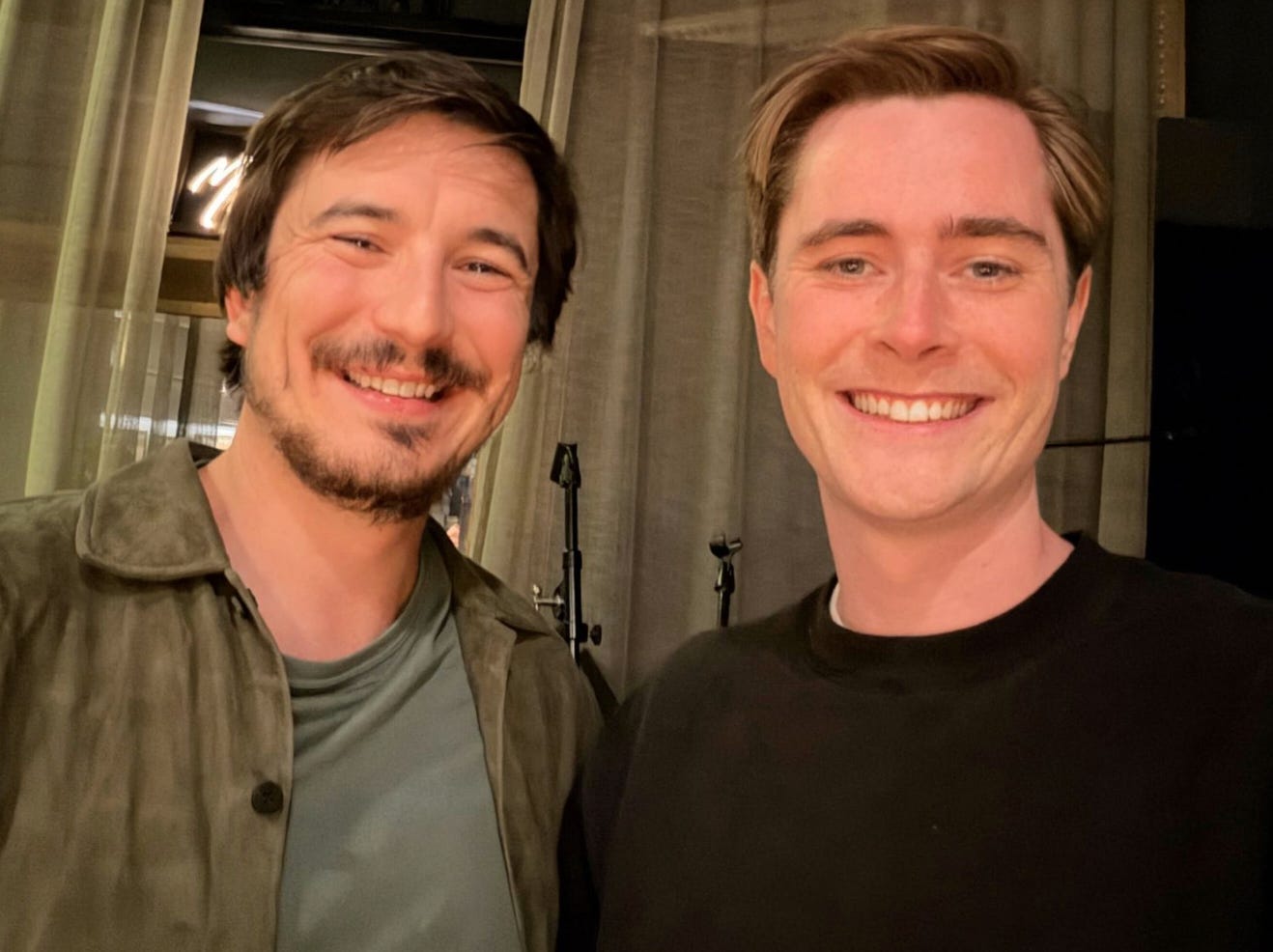
The team has technical talent in their DNA. Florian Juengermann was a national champion in competitive programming in his home country, Germany. Alfred Wahlforss’s brother was a co-founder at Soundcloud. Some of their first hires included three medalists in the International Olympiad in Informatics (top 0.1% of programmers), a chess player with a 2000 ELO rating, and former Jane Street quants. In the past year, Listen has grown from 10 employees to around 24.
As the team has grown, so has the competition.
In October 2025, Strella AI raised a $14M Series A to expand its AI powered customer research platform. The round was led by Bessemer Venture Partners, and customers include Chobani, Amazon, and Duolingo.
In June 2025, Outset AI raised a $17M Series A to help enterprises scale customer research led by AI agents. The round was led by 8VC, and customers include WeightWatchers, FanDuel, and Intuit.
In September 2025, Kepler raised a $3.4M seed round to conduct AI powered customer research interviews. The round was led by Kleiner Perkins, and customers include Clorox and Intercom.
Listen’s seed and Series A rounds were led by Sequoia Capital, and more specifically, Bryan Schreier, who was an initial investor in the customer experience platform Qualtrics. Their willingness to double down on the investment in such a short timeframe is a positive signal to say the least.
The company has a number of impressive customers including Robinhood, Nestle, Microsoft, UFC, and Canva. Some of these customers pay Listen $1M a year.
In Q4 2025, Listen quietly raised a $69M Series B led by Ribbit, in an unannounced round of funding to leapfrog over the competition. The company officially announced the raise yesterday.
An investor involved with the round says it got done at a $500M - $600M+ valuation.
Be on the lookout for their unicorn round in due time.
Listen Labs’ early success is an excellent reminder that our biggest problems are simply opportunities in disguise.
sometimes you just need to
shut up and listen.
Full January Watchlist.
Delve
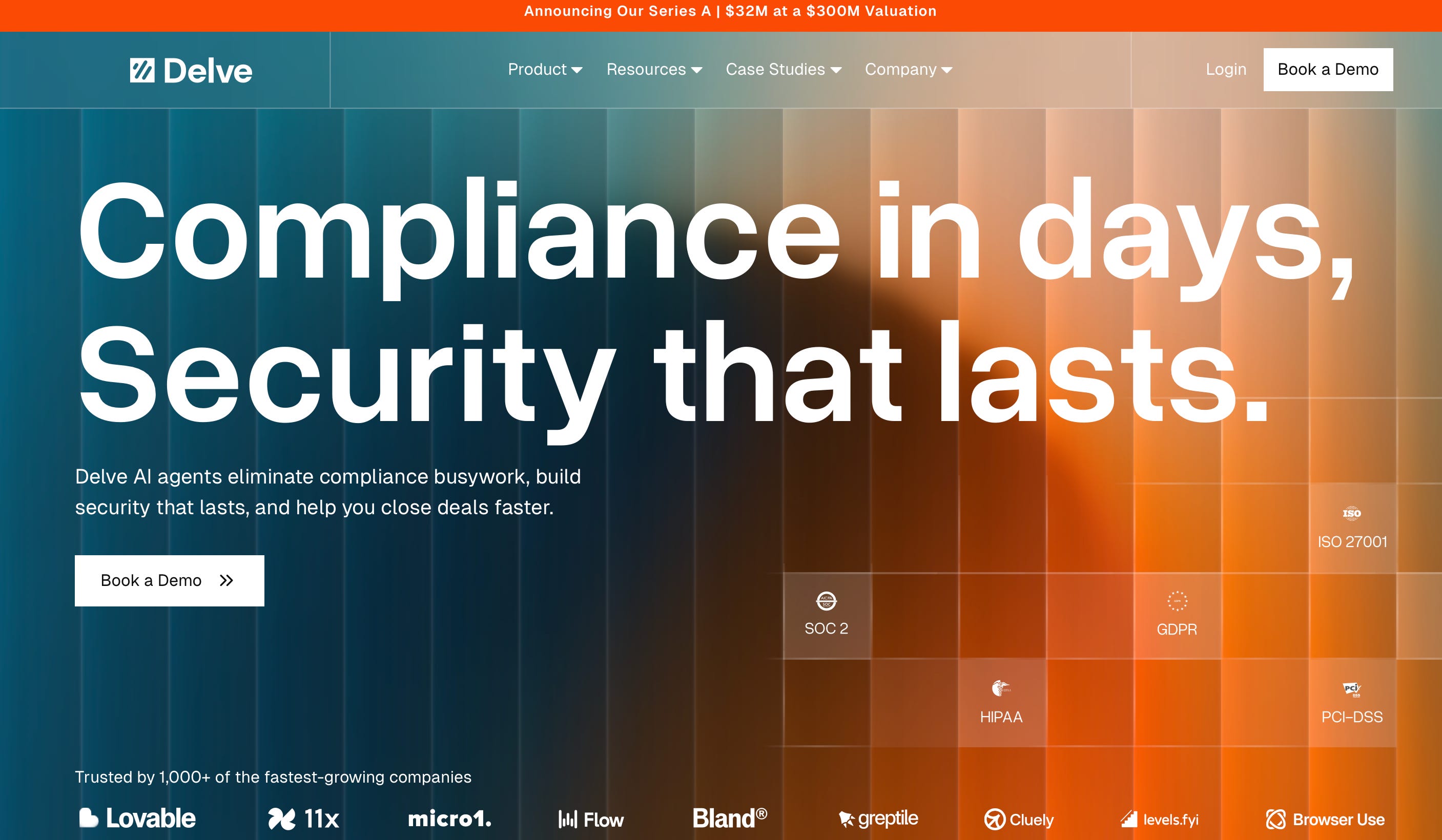
Company Overview: Delve automates compliance for startups, namely SOC-2, which allows founders to get to revenue faster. The company announced profitability in the summer of 2025 and boasts of customers like Lovable, Bland, and WisprFlow. The platform is designed to get companies audit-ready in a matter of days rather than months.
Founders: Karun Kaushik - MIT dropout and Y-Combinator W24 founder; Selin Kocalar - MIT dropout and Y-Combinator W24 founder
Investors: Insight Partners, General Catalyst, Soma Capital, Y-Combinator
Amount Raised: $35M+ (Series A stage)
Headquarters: San Francisco, CA
Fundamental Research Labs

Company Overview: Fundamental Research Labs (fka Altera) is on a mission to build digital human beings. The company has an interesting organizational structure with separate teams building multiple AI applications in different fields: a prosumer team building apps, a core research team, and a platform team. Their most notable product launched so far is Shortcut, an AI agent that creates spreadsheet financial models and beats Goldman Sachs + McKinsey analysts head-to-head 89% of the time, even with the analysts getting 10x as much time to complete tasks.
Founders: Dr. Robert Yang - an MIT assistant professor that spun Fundamental Research Labs out of an applied research lab at MIT; Nico Christie - a former professional dunker and MIT Sloan MBA dropout; Andrew Ahn - an MIT PhD and former Ivy League professor; Shuying Luo - an ex-Google software engineer
Investors: Prosus, Patron, First Spark Ventures, a16z speedrun, Patrick Collison (Stripe co-founder)
Amount Raised: $42M+ (Series A stage)
Headquarters: Menlo Park, CA
Starcloud

Company Overview: Starcloud (fka Lumen Orbit) is building datacenters in space to power the artificial intelligence boom, reducing associated electricity costs by 90% and generating 24/7 solar-powered efficiency. In early November the startup launched a satellite with an Nvidia H100 GPU into space, and in December the company’s Starcloud-1 Satellite ran and queried responses from Google’s open source large language model, Gemma.
Founders: Philip Johnston - CEO of Starcloud, a University of Nottingham grad with a Wharton MBA, former McKinsey consultant and sold his last startup, Opontia, in three years; Ezra Feilden - CTO of Starcloud, an Imperial College London MS + PhD, an aerospace engineer with 7+ years of experience.
Investors: Nvidia, Y-Combinator, NFX, Sequoia, a16z, In-Q-Tel (CIA)
Amount Raised: $24M+ (seed stage)
Headquarters: Redmond, WA
PreDoc
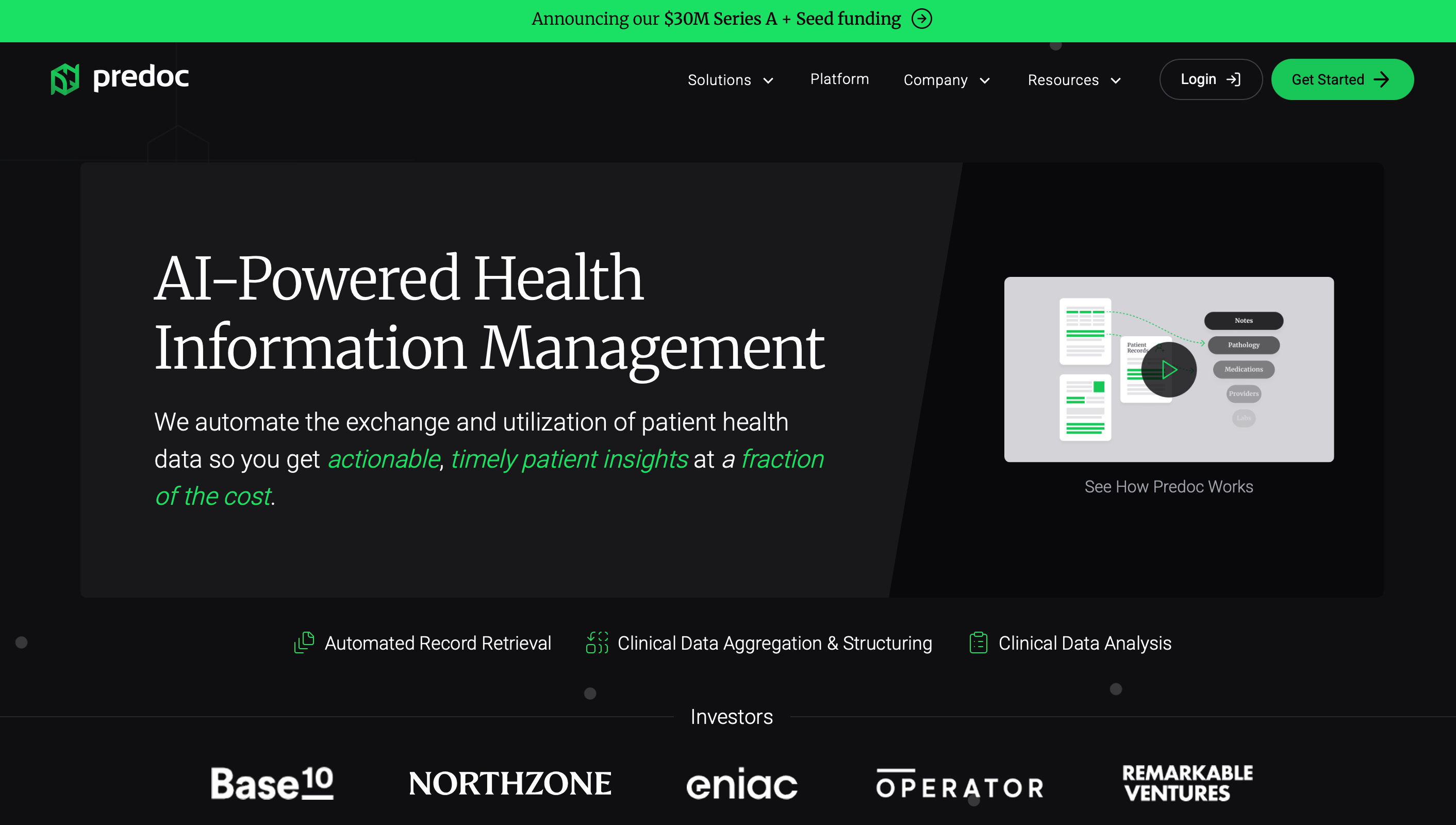
Company Overview: PreDoc is solving one of the most painful problems that doctors have on a frequent basis: chart-chasing, or the manual retrieval of patient records. The company uses AI to automate medical record management and ultimately give physicians an extra day in the week through time savings, allowing practitioners to actually practice medicine.
Founders: Nishant Hari - CEO at PreDoc, former derivatives trader at Citi, RBS, and HSBC, Kaushal Kulkarni - Chief Medical Officer at PreDoc, a Columbia BA and Rutgers MD, previously founded an eye-care startup that was acquired in 2024.
Investors: Base10 Partners, Northzone, Eniac, Remarkable Ventures
Amount Raised: $30M+
Headquarters: New York, NY
Multiplier Holdings
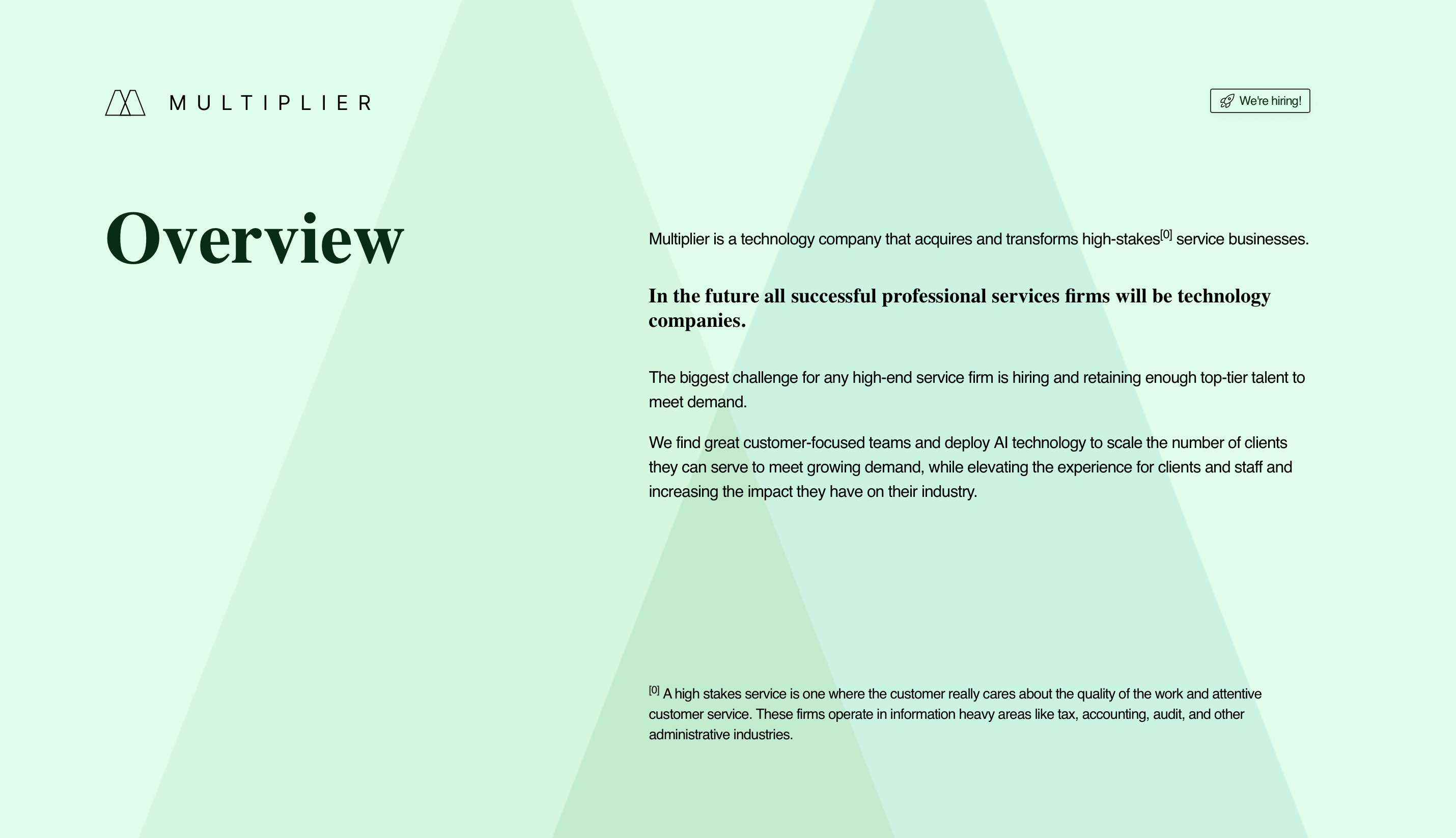
Company Overview: Multiplier Holdings is an AI rollup acquiring small accounting firms and deploying AI to improve margins and scale client growth. Their first acquisition was Citrine International Tax, a 12-person tax accounting firm that provides cross-border accounting services. One of the accountants at Citrine, Emily White claimed that “prior to Multiplier, I sent out 14 tax returns in a 14 hour day. This year I was able to send 24 tax returns in a 10 hour day…”
Founders: Noah Pepper - CEO and founder of Multiplier Holdings, a Reed College graduate who previously sold his startup, Lucky Sort, to Twitter, before serving as Stripe’s APAC Business Lead.
Investors: Lightspeed, Ribbit, SV Angel.
Amount Raised: $28M+ (Series A stage)
Headquarters: Singapore
OpenRouter
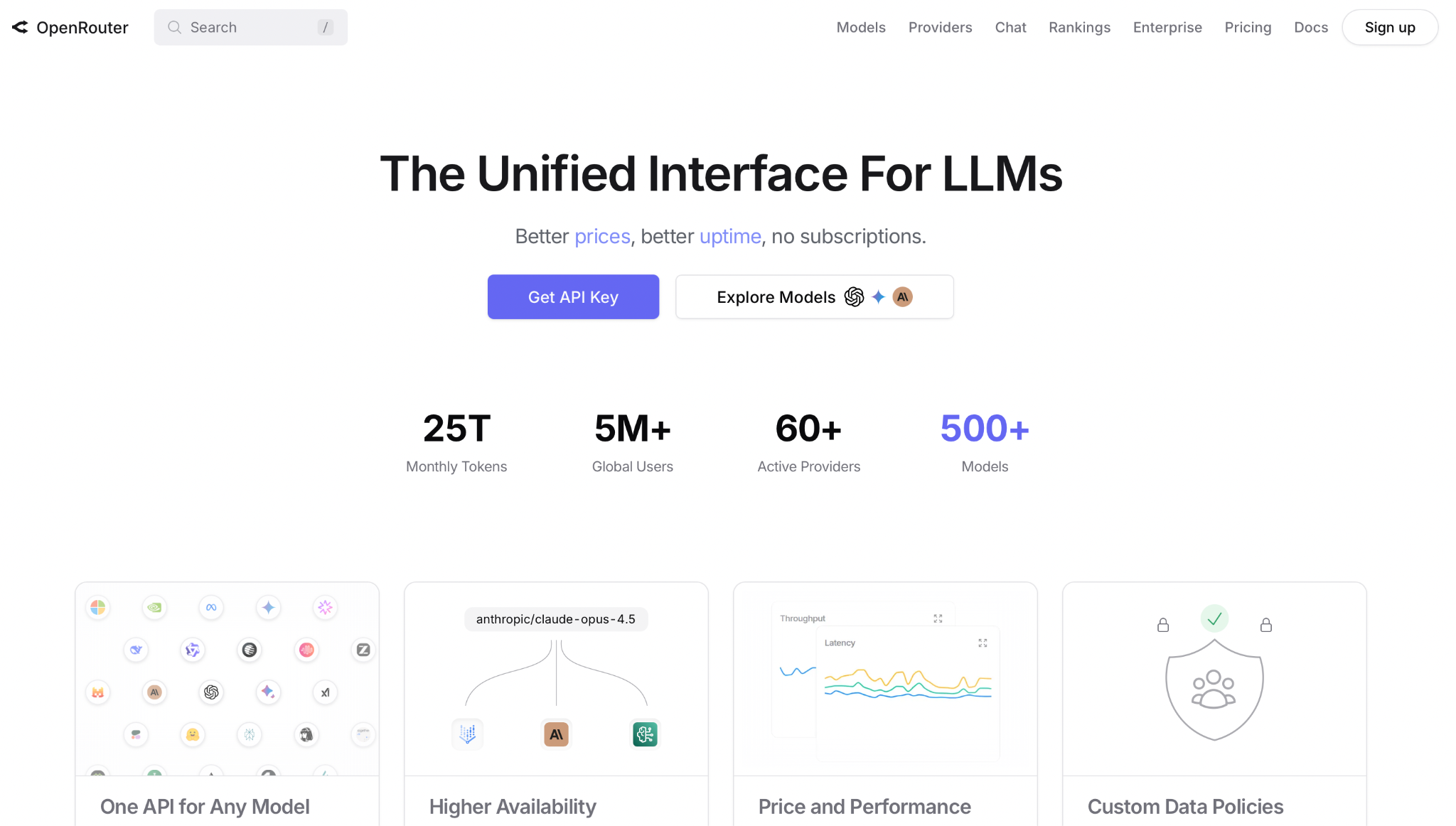
Company Overview: OpenRouter is the unified interface for large language models - it gives over 2.5M developers a single API to access all the models, 400+ to be precise. Developers love the ability to switch between models, making gametime decisions on whether to optimize cost, latency, or performance. OpenRouter’s public LLM rankings board has now become a staple in the developer community, rivaling LMArena ($1.7B valuation) and other competitors. Menlo Ventures and Andreessen Horowitz led the $40M Series A back in June 2025.
Founders: Alex Atallah - OpenRouter co-founder and CEO, Stanford BA, founder of OpenSea NFT marketplace; Chris Clark - co-founder and COO, Vanderbilt BS, co-founder and CTO of Grove
Investors: Menlo Ventures, Andreessen Horowitz, Sequoia
Amount Raised: $40M+ (Series A stage)
Headquarters: New York, NY