
On Alignment.
ex mero motu.
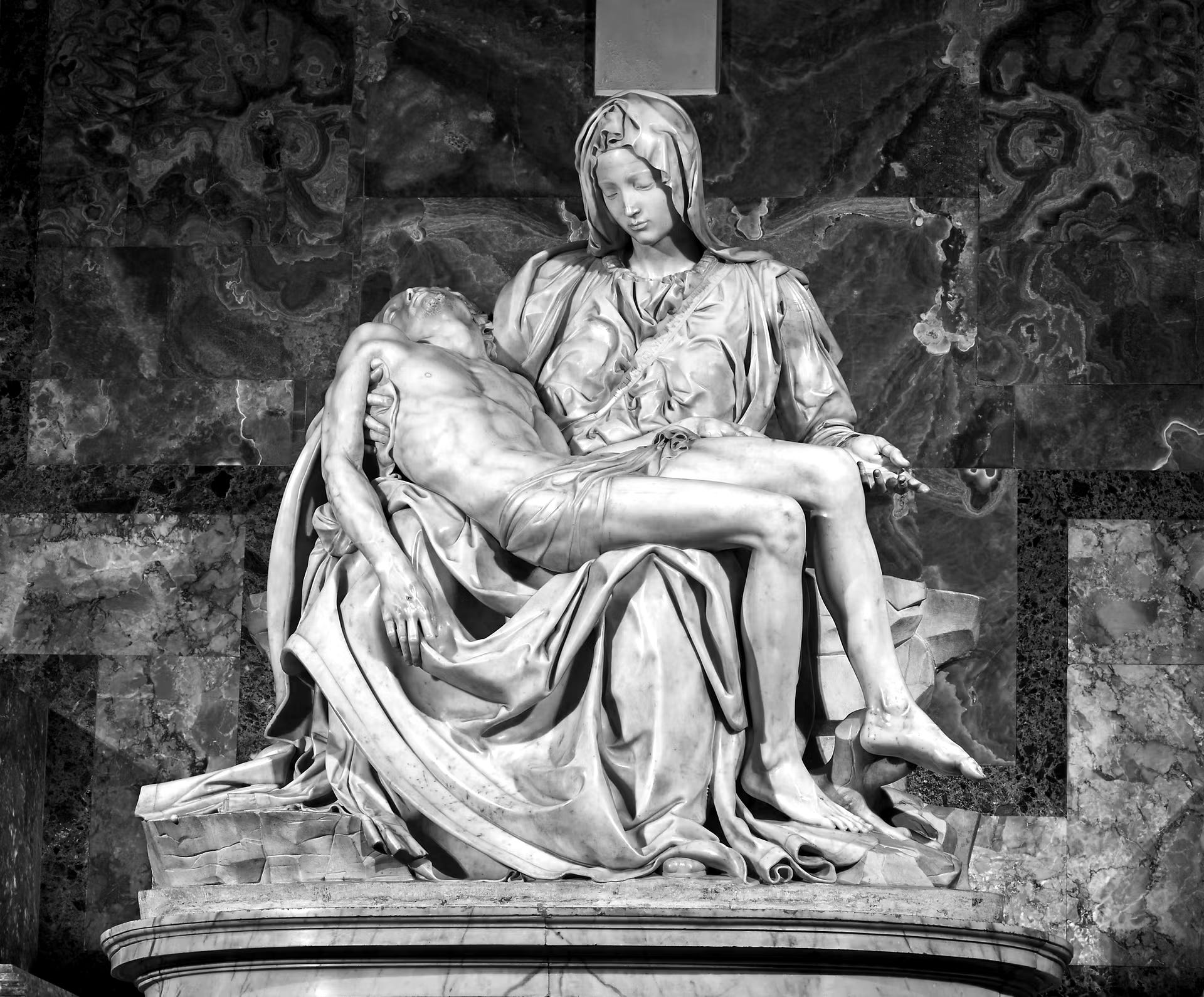
I. In all things, a rightful order exists. The lesser goods are incomparable to the greater goods, yet, in the same way that a rightful order governs the greater goods, lesser goods can still exhibit beauty by obeying said rightful order. Through this lens, we can observe two identical species performing similar actions and still prefer one to another, as foretold: “two men will be out in the field; one will be taken and one will be left.” Therefore, how something is done carries nearly as much weight as what is being done. The latter is simply the precursor to the former; an action lacking in goodness cannot qualify, but assuming a fundamental level of lesser goodness, how something is done carries just as much weight as what is being done as it relates to the process of determining holistic goodness. It is to this effect that today’s address must be put forth. Over time, it has become clear that a string of related deficiencies have emerged in this lesser world we inhabit, and these violations are not crimes pertaining to what is being done, but rather, how things are being done. Further, these unpunished offenses have become fairly commonplace among both buyers (investors) and sellers (entrepreneurs). Said offenses lie in plain sight, yet remain all but entirely hidden. Going forward, the following will be deemed crimes against alignment.
II. Alignment between a buyer and seller ensures all parties reap similar rewards in successful times and experience similar hardships in difficult times. Ideally, such alignment would be strong on both sides, rather than weak on both sides, or, even worse, weak on one side and strong on the other. There are far too many arrangements in which an entrepreneur has put everything on the line - their liquid net worth, time, and network - while the lead investor treats the company as one of many lottery tickets. On the other hand, weak alignment on both sides occurs when a CEO or primary founder is not fully invested in the company he is raising money for. The founder has invested a small amount relative to net worth, and, in general, will be relatively fine if the venture does not succeed. Strong alignment, a most rare scenario, takes place when both founder and investor concentrate their resources into the same entity, ensuring that both are similarly motivated to take drastic action in hopes of success. The most notable example of strong alignment in recent history can be found in the SpaceX - Founders Fund relationship.
III. The notion that a founder should be prepared to lose most of their net worth in the case of failure is, without doubt, a hard saying to hear. The majority of entrepreneurs need not follow this law, as it only applies to those who choose to bear the burden of equity investors on their capital structure. A fundamental teaching in finance: debt is less expensive than equity. Company insiders have more information than financiers to predict future success of the company, and therefore, if they believe there is a strong likelihood of great success, issuing debt is the far less expensive option. Assume the company needs to raise $100 million to finance data centers and generate $700 million in revenue in the next two years: $100 million of debt at a 12% coupon is a fixed amount that needs to be either be paid off or refinanced in the medium term, whereas $100 million of equity at a $500 million post-money valuation means the company is selling 20% of their future earnings at a much lower price than their valuation post-success. If the company believes with relative confidence they will experience success, debt is the far less expensive option; ownership of the company outweighs the downside of debt payments. Theoretically, this mental model should break as you move away from established business models and into the startup space. New founders are working on unproven concepts and usually experience high uncertainty in their future prospects, making an equity fundraise the proven path for a shot at winning. Additionally, most founders are unable to tap significant credit lines. For early-stage founders, this makes sense. But some outliers are coloring outside the lines and embracing bankruptcy risk to own their art in entirety: William Hockey, a co-founder of Plaid, launched Column, a neobank, in 2022, financing the startup costs by taking a sizable loan out against his existing Plaid stock. If you plan on succeeding, debt is cheaper than equity. Now back to alignment. If you plan on raising equity, your future fortune should be tied to the success of the company, and, by logical extension, failure should result in momentary loss. Not because an eye-for-an-eye is superior legal structure, but because there is no gain without true risk. This is rightfully ordered.
IV. More founders and fund managers than ever before are unaligned with their backers. The founders treat their companies as “bets” or “call options,” and the investors do the same. As mentioned previously, the logical fallacy here is an unspoken hope that one can win big without exposing themselves to extraordinary uncertainty. Any arbitrage unrighteously taken will be paid for at a later date, with interest. Is it not vulnerability herself that births new levels of innovation? When fear and uncertainty knock, the heart’s prayers increase in sweetness and truth. The man that does not battle risk fervently in this life deprives himself of the chance to croon before heavenly power as the Psalmist did in times of war. What is there to lose? If the answer is nothing, then expect the same answer when searching for reward. Casino culture has crept into America’s economy, but make no mistake, the casino owners must pay for their role in financing degeneracy. Fund managers buy into taking “bets” on companies because their livelihoods are not tied up in their vehicles. Ask how much of his net worth is in that vintage. Now look at the way he invests. Makes sense
V. The family is a greater good, a shining light when rightfully ordered. While each of the individual components of a family are deeply good, - father, mother, child - together the sum of parts is incredible. Perhaps even beyond understanding. Who is the most important member? It is a mystery. The father seems to be the most important from a traditional point of view, given the physical power for protection, and responsibility assigned across various human societies. However, it is the mother who bears and nurses the child, thus bringing a new member into the family and creating a new sweetness. And although the child, the weakest member by all counts, is dependent on mother and father, an alien observer might note that both mother and father serve the child as though they were slaves to an inferior, albeit cuter, being. Therefore, every member of the family possesses infinite dignity to the other, and the stronger members love the weaker members as though their weakness was strength itself. The father ought to die protecting the mother and child, and the mother ought to die protecting the child.
VI. From the greater good of family, a proper observance of rightful order is obtained. Rightful order must then be cross-applied to the lesser good of business. Which founder will die to themselves for their employees’ sake? To put everything on the line, and if need be, suffer the losses to protect their employees, and by extension, their employees’ families? Instead we hear of founders that have accepted lucrative acquihire packages, leaving behind employees and investors for greener grass. We hear of lead investors that invest in companies that are direct competitors to each other. We hear of founders that leave their previous venture-backed companies to start new ones in higher growth arenas. Were they not free to do as they wished when they were employees themselves? Should their portion be any greater than that of a chronically adulterous father, who, upon finding an illicit mistress in foreign land, selfishly abandons legitimate wife and children?
VII. There is a fascinating scene in The Dark Knight Rises that features Bruce Wayne trying to escape an underground prison that Bane abandoned him in. The only way out is a one hundred foot climb up a chimney-esque structure that no prisoner has successfully completed, save a “child born in hell.” Because of this, the prison has no need for guards or security, men are lowered in and left to die. In his first few attempts, one of the prisoners strapped Bruce into a safety rope, so that when he inevitably lost his footing, the fall did not result in fatality. Bruce fell several times, most frequently at a critical junction near the top where he must jump from one ledge to another around seventy five feet up. The distance between the two ledges was significant, and Wayne fell short twice. As he continued to train in preparation for the next climb, an old man in the prison rebuked his efforts. The reason he couldn’t complete the climb, the old man said, is because Bruce did not fear death, the most powerful human motivator. Bruce then realized he feared dying in the prison while the city burned. So make the climb, the wise man said. Bruce was confused. How? The man responded, “As the child did, without the rope.” Surely, when Bruce climbed without the rope, naked to the eyes of death, against all odds, he jumped further than he did before, and he made his way out of the pit.