History, Liquidity, Supremacy
not just another bday.
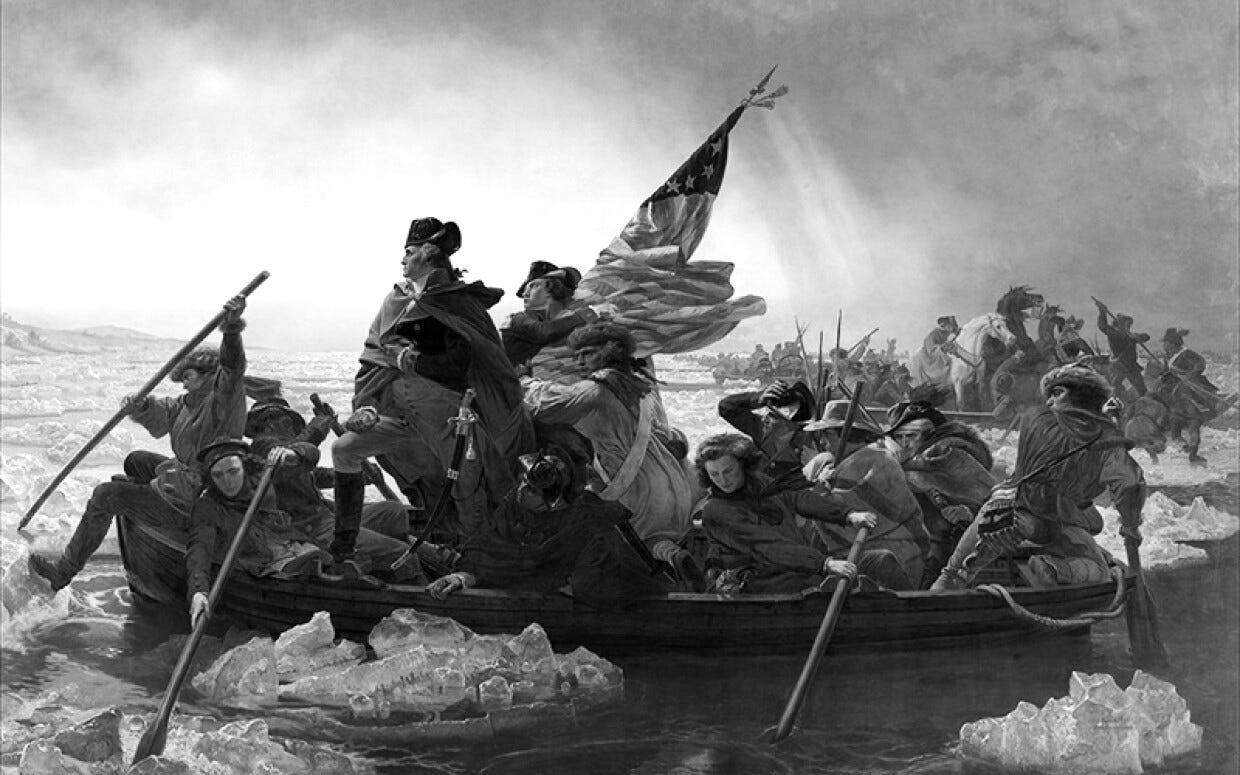
A quarter of a millennium later and we’re still pushing.
Since the very beginning, we’ve always been unique. Not in the sense a revolution preceded our birth; that is an ordinary occurrence throughout history.
What is unique is that innovation was present from the first moment.
The concept of democratic principles had been around for thousands of years, spanning back to the Ancient Greeks. Nobles and aristocrats making decisions was no novel concept. A single leader with centralized authority was a tale as old as time.
But it had been a while since anyone put together all three.
To observe the last time it was executed, we must traverse back to Rome.

Similar to the Americans, Rome was founded after the overthrow of a despotic tyrant, Lucius Tarquinius Superbus, and thus were cautious of consolidation of power in the hands of a single individual. The two consuls served as the decisive co-monarchic leaders, especially in wartime, working alongside the aristocratic Senate and democratic popular assemblies. However, the turn of the millennium marked a shift in which the emperor began to accumulate more power, and by the late 3rd century during Diocletian’s rule, historians agree that the Senate and popular assemblies were just there for show. But for a while the Romans had a good thing going. The Founding Fathers identified this and took some notes.
Hence, innovation isn’t always producing something completely new, but rather it can be looking backwards and bringing old ideas to life with a new and original twist.
The rule of one was through the president, the rule of the few was by the Senate, and the rule of the many was represented by the House of Reps. The system fit into this box much cleaner pre-17th Amendment, as before this, Senators were elected not by the people but rather by the state legislatures, serving as a longer term ruling elite blocked off from the passions and demands of the people.
The key addition to the Roman model was a written Constitution that clearly enumerated the separation of powers to ensure that the roles of the different bodies weren’t left to oral tradition so that separation of power could not slowly be eroded as with the Romans. Moreover, the concept of federalism meant that there were not only checks between the different branches of federal government but also between the federal and state governments as well.
The new and improved Rome was ready to go.
The 1780s and 1790s saw the formulation of the Constitution, Bill of Rights, and Washington’s warning about excessive partisan divisions. The 1800s and 1810s consisted of expansion through the Louisiana Purchase and proving the Revolutionary War wasn’t a fluke through a draw in the War of 1812, producing our anthem of “The Star-Spangled Banner.” The 1820s and 1830s gave us the establishment of authority in the Western hemisphere through the Monroe Doctrine and economic growth that proceeded from expansion of railroads, canals, factories, and banking. The 1840s and 1850s resulted in even more land, acquiring western states like California and Nevada through the Mexican-American War victory, leading to the compromise of 1850. The 1860s kicked off with a victory from Abraham Lincoln, causing southern states to secede and sparking the bloodiest American war to date, claiming the lives of roughly 700,000 Americans. The 1870s and 1880s marked the Reconstruction Age, as the South began to be reintegrated back into the Union, as well as the rise of business tycoons, with Carnegie controlling steel, Rockefeller monopolizing oil, and Morgan dominating banking. The 1890s and 1900s saw another American victory over a foreign adversary, claiming Puerto Rico and Guam in their victory over Spain as well as Teddy Roosevelt leading the charge to break up monopolies created by the aforementioned moguls and their associates. The 1910s and 1920s included the formalization of federal income tax, US’ entry into World War I, the beginning of American global dominance, Ford producing the model T, and the economic boom that was the Roaring Twenties. The 1930s showed us what comes up must come down, with the Great Depression erasing the previous decade’s gains and more, not just in the US but around the world. The 1940s and 1950s saw the US enter back into global combat, finishing off the war with the infamous bombing of Japan, as well as the population boom that proceeded from soldiers returning home. The 1960s and 1970s changed the entire fabric of the nation’s culture, as race, gender, and cultural relations would never be the same. The 1980s produced supply side economics and heightened paranoia surrounding the Cold War until the Berlin Wall eventually fell. The 1990s and 2000s were all about technology, from the rise of the computer–and stocks associated with it–until cell phones dethroned its popularity. The 2010s saw a recovery from the Global Financial Crisis as well as a continuation of the previous decades’ technological advancements with cell phones continuing to advance and the proliferation of social media and entertainment apps on said devices. Lastly, the 2020s gave us…
The first trillionaire on record.
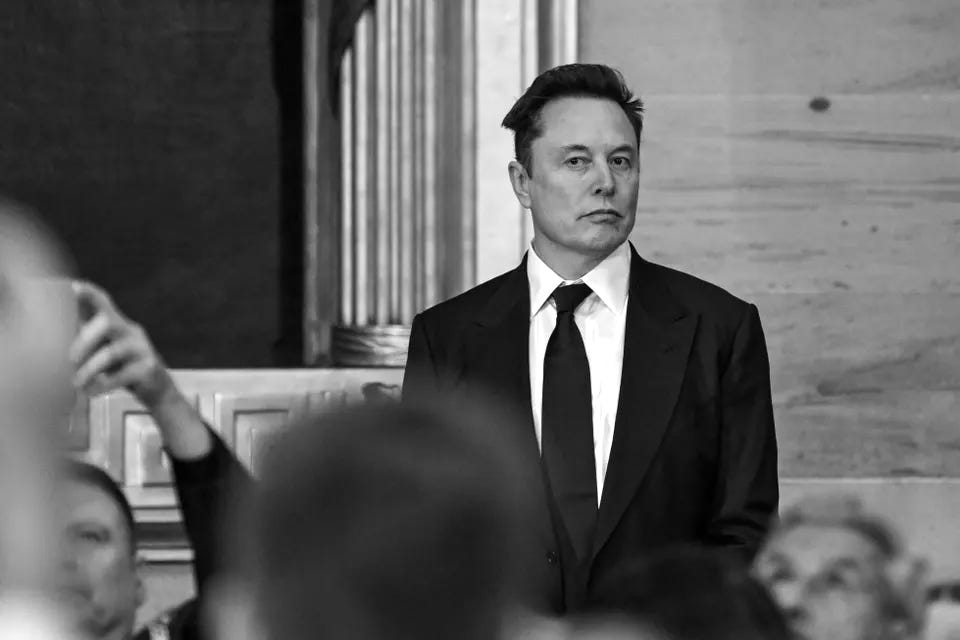
Very fitting that the milestone comes on the cusp of the nation’s 250th birthday.
His trillionaire status will likely continue to oscillate as post-IPO volatility is to be expected but the point still remains.
What many are keen to forget is that just a few years ago, Jeff Bezos was the man to beat. Most thought he would hit the big T status before anyone else, as from 2017 to 2021, Bezos always reigned supreme on the annual Forbes list. The spring and fall of 2021 was the year of the Tesla stock boom that put food on the table and Tesla’s in garages for the pandemic day traders with good timing. The rivalry is hard to ignore, as both have their “main company” and their respective space companies on the side, as both have publicly claimed they will “conquer” Mars before the other. Not only has SpaceX thoroughly outperformed Blue Origin but its valuation is on par with Amazon, briefly passing it before retreating.
Bezos is not just sitting idly by but rather recently came out of retirement, sliding into his first operating role since he stepped down from Amazon in 2021.
Bezos has begun working on Project Prometheus, a company building an artificial general engineer meant to be the physical AI for the industrial economy rather than chatbots and consumer applications. By modeling, simulating, and optimizing sophisticated physical products, they aim to bring efficiency to the “design-build-test” loop across the most capital intensive industries. Created in San Francisco in November of 2025, they’ve hired nearly 150 employees from companies like DeepMind, OpenAI, Meta, and Nvidia. Despite being pre-product, the company raised a $6.2B Series A funded almost entirely by Bezos in November and are currently raising a $12B Series B at a $41B valuation with participation from DST Global, BlackRock, JP Morgan, and ARCH Venture Partners.
Only time will tell if / when Bezos will reach trillionaire status as well.
For now, Musk stands alone.
Now that Musk is a trillionaire, the scrutiny has of course increased, with a sizable increase in Twitter commentators urging him to liquidate his assets and single-handedly solve world hunger. In fact, the streets are saying that sum of money could solve world peace; after all, simply present both sides of any conflict with billions of dollars, and they have no other option but to call a truce.
In all seriousness, it is interesting to see the changing attitudes towards notable milestones of wealth being amassed.
John Jacob Astor is widely regarded as the first American millionaire, generating a net worth of $20-$30 million before his death in the early to mid 19th century. Born in Germany in 1763 before venturing to America after the Revolutionary War, he was your favorite salesman’s favorite salesman with the ability to sell wings to a bird. He entered the fur trade, initially sourcing from Native Americans himself before eventually importing from Canada and selling the fashionable beaver fur hats domestically and internationally. After the British destroyed his trading posts during the War of 1812, he pivoted and entered into a more lucrative trade: opium. Between 1816 and 1825, he sold hundreds of thousands of pounds of the illegal substance through bribing port officials before exchanging it for Chinese goods like silk and tea that he would sell domestically. After years of engaging in the “fair, honorable, and legitimate trade,” according to fellow American businessman Warren Delano, father of FDR, he washed the money through New York City real estate before calling it a career and admiring his work.
Rather than inquire about the shady dealings, the public admired him and praised the fact that wealth at this scale could be produced by an individual, rivaling the notable European businessmen of the day.
“There are few men whose biography would prove more instructive or more acceptable for the present age than the life of John Jacob Astor.”
There was a similar reaction to the emergence of billionaire titans like Rockefeller, Carnegie, and Vanderbilt. Most Americans viewed these men as examples of the outlandish but rightfully earned outcomes that could happen to anyone who was enterprising, dedicated, and intelligent enough to build a good business from the ground up. Tides would eventually begin to shift as the anti-competitive measures that many of these figures engaged in began to surface, with famous The History of the Standard Oil Company by Ida Tarbell marking the official turning point of public opinion. They would eventually slightly improve their images through highly conspicuous philanthropy and contributions to education, with Rockefeller creating the University of Chicago and Vanderbilt establishing the “Harvard of the South.”

Fast forward to today, and the public’s perception of these business magnates is more negative than positive for sure.
My gut tells me Elon doesn’t really care at this point; most of his energy is likely going towards smoothly transitioning SpaceX from the private to public lifestyle.
Elon is undoubtedly the biggest winner of the IPO but there are of course many winners. Firstly, a big shoutout to the SpaceX janitors that will now see their net worth swell to well over seven figures. The executive team and earliest hires are the next winners, with their longstanding devotion to the company paying off handsomely to the tune of hundreds of millions of dollars, if not billions. Last but not least, the early stage investors that will be seeing their long-held investments realized at last.
While firms like DFJ Growth and Valor Equity Partners invested at the earlier growth stages and bigger fish like Sequoia and Andreessen Horowitz would come in later in the game, the biggest investor is likely Peter Thiel’s Founders Fund. SpaceX was on the brink of bankruptcy in 2008 after three consecutive failed Falcon 1 launches and needed funding immediately. Musk called his former PayPal associate Thiel and he invested $20M, before investing more than $600M over the company’s lifespan. The firm now owns roughly 3% of the company resulting in a roughly $60B stake.
The effects of an outcome like this in a liquidity starved venture environment are monumental. The DPI boost that these massive firms will be able to boast of will likely drive concentration of LP capital to a place people didn’t think was possible. Everyone is already aware of this existing concentration but the trend will become even more pronounced. Now throw in the reality that OpenAI and Anthropic are eyeing IPOs as well, and things could get spooky for the non-mega funds’ access to capital. The pitch from mega funds to prospective LPs becomes simple: the number of generational companies that can reach trillion dollar outcomes is increasing and we and a small number of select investment firms are the only ones who can consistently access them. With the previous three companies as examples of realized capital at these astronomical valuations, institutional investors, in theory, will put the emerging and mid-sized manager deployment on pause and re-up with the big dogs. Are there actually companies being conceived of at this very moment that can actually reach these valuations? The answer to that isn’t entirely obvious but doesn’t seem to be relevant, as these investors will likely hand over the cash regardless.
In addition to the blockbuster IPOs that have happened and are on the horizon, notable venture backed M&A activity has ticked up as well. SpaceX acquired Cursor for $60B in stock as a way to bolster its AI vertical after several controversies and mishaps with the company’s original model, xAI. The $60B price tag is the largest VC-backed M&A transaction ever recorded, providing investors like Andreessen Horowitz, Thrive, and Accel with some DPI as well.
Within the span of a month, we’ve seen the largest IPO and venture backed acquisition in history.
The tides are definitely shifting but the real question mark is whether exit opportunities will open back up for the market as a whole or will it continue to be the biggest fish feasting while everyone else starves.
That is to be determined.
Speaking of shifting tides…
This country has seen a lot, been through a lot, and most importantly achieved a lot.
The list is too long; we’ve dominated in just about every field, and sports is no different. To quantify this dominance, the US has won more than 3,100 medals in the Olympics, over 1,000 more than both Russia and Germany, the next two in line.
The only relevant sport that we are lackluster in is soccer. This likely has to do with the fact that Americans tend to focus on the major sports that were created in the U.S. like basketball, football, and baseball. After all, this seems like the patriotic thing to do, thus benevolently allowing foreigners maintain superiority in soccer.
Accordingly, the USMNT has seen many ups and downs, and although there is likely a higher frequency of downs, their first World Cup in 1930 started with a bang, reaching the semifinal game before settling for a 3rd place finish. The team’s goalkeeper, Jimmy Douglas held Belgium scoreless, posting the first shutout in World Cup history, making the entire city of Newark, NJ proud. Its neighbor within 10 miles–New York City–must have been proud too.
In fact, now that New York City is mentioned, the Knicks’ recent championship is highly relevant to this discussion.
In hindsight, it was the Knicks’ year. Despite the better-than-expected regular season, Boston seemed very beatable without Tatum, and even when he returned, he didn’t look 100%. The Sixers were inconsistent all year, and it is difficult to flip the switch and gel together when everyone’s healthy. The Pistons completed their rebuild and put together a 60 win season but had minimal playoff experience. Despite all of this, the Knicks really weren’t on anyone’s radar because…well they’re the Knicks. Even with the relatively new roster construction and a steady captain in Jalen Brunson, most people expected them to probably make the semifinals, maybe even the ECF if we’re being gracious, before settling into their ostensibly eternal destiny: disappointment.
But this time was different, and the New Yorkers would tell you that they could feel it in the air. But how did they know? They could rattle off the reasons why other teams weren’t going to win, similar to what was listed earlier; but the real reason was an intangible gut feeling that this was the year, end of story.
The same can be said about the USMNT.
Firstly, it is on our home turf.
Yes, the country hosted the tournament in 1994, and we didn’t win, but the result is significant. In 1950, the team failed to reach the elimination stage, sparking a decades-long drought of not qualifying that would finally end in 1990, where they were once again knocked out before elimination play. However, once we had the home field advantage in 1994, they advanced to the round of 16 for the first time since 1934. Since then, they’ve had solid performances including reaching the quarterfinals in 2002 and reaching knockout play in 2010, 2014, and 2022.
Thus, this is the year where we go from reaching the elimination stage being a win to transforming into a real contender, with the catalyst being the home advantage.
To top it all off, the nation’s 250th anniversary is approaching, so we have no other option but to bring the cup home in honor of the Founding Fathers and make a truly remarkable statement of American supremacy over the rest of the world.
God bless America and let’s get the job done.