

Every retired athlete faces the same inevitable question: What happens when the game ends?
At 34, Henry Anderson finds himself in the same boat as thousands of athletes before him - wondering how to build a life, and wealth, beyond sports.
His answer? Acai bowls.
It sounds almost absurd. A Stanford-educated defensive end who played nine seasons and earned millions in the NFL, now investing that hard-earned wealth into smoothie bowls in Nashville strip malls. But Henry isn’t gambling on a random idea - he’s pursuing a wealth-building strategy that reminded him of his days playing in the NFL.
“Our third store opens next week” he says. It’s been less than two years since he hung up his cleats, yet he’s already built a multi-location franchise operation. The target? Fourteen locations across Tennessee, each aiming for $1 million in annual revenue.
Three stores in and millions invested, one question remains: Will Henry’s bet on Acai bowls pay off?
The Franchise Advantage
“The franchise model is a lot like football, where the coach gives you the playbook and it’s up to you to learn it like the back of your hand and execute it at a high level.”
Henry’s journey represents a growing trend among athletes who are discovering franchising as a strategic wealth-building tool. Unlike starting a business from scratch, franchising appeals to former players because it offers something familiar: established systems, structured training programs, and measurable benchmarks.
He’s following in the footsteps of former NBA player Shaquille O’Neal, who built a franchise empire spanning Papa John’s, Auntie Anne’s, and Krispy Kreme, or former NBA player Junior Bridgeman, who quietly transformed his modest on-the-court earnings into a restaurant franchise worth hundreds of millions.


Where others see the grind, he sees familiar territory.
The same skills that made him successful on the field - discipline, attention to detail, and the ability to execute under pressure - translate directly into competitive advantages in the franchise world, where success is about thoughtful execution of proven playbooks.
Playing The Long Game
Henry’s transition to franchising didn’t happen overnight - it was years in the making, rooted in conversations that began long before he ever stepped foot on a football field.
“One of my dad’s good buddies was a big Taco Bell franchisee,” he recalls. “I played golf with him a lot when I was younger, and he was a really interesting guy to talk to. He seemed to be living a life where, if you get to scale in franchising, it kind of runs itself.”
Those casual conversations on the golf course planted seeds that would grow throughout Henry’s career.
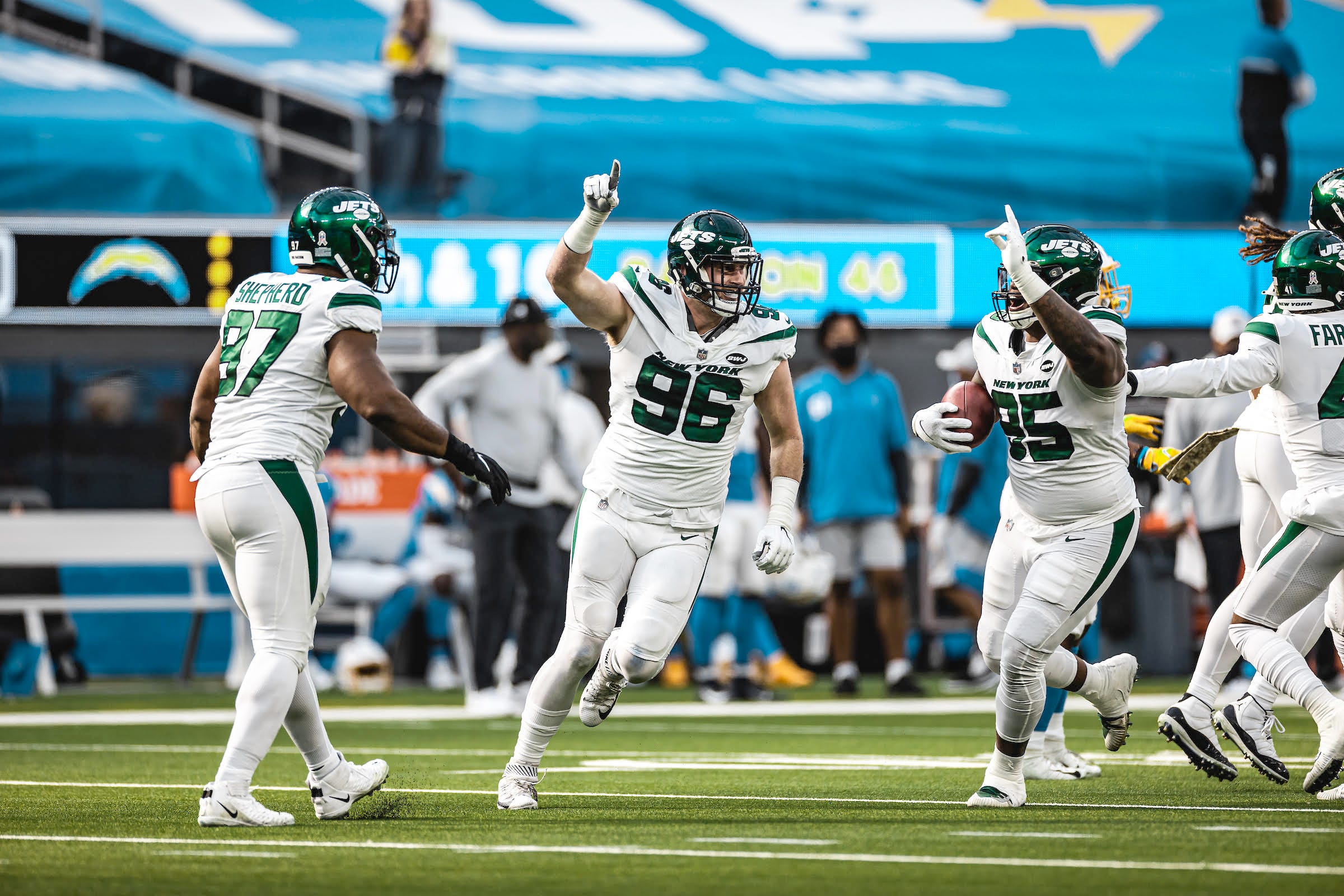
Henry was always a step ahead on and off the field.
While other high school recruits chased the biggest football programs, he chose to attend Stanford. “I went to Stanford because I never even thought that I would be able to play in the league, so I wanted to prioritize my education,” he explains. During college, he balanced football with internships at private equity firms, always maintaining what he calls “an interest in the finance world.”
Even as his NFL dreams became reality, Henry kept building his exit strategy. Later in his career, he spent off-seasons at Harvard Business School, completed a venture capital fellowship, and participated in NFL Players Association workshops.
“Once you’re on the wrong side of 30, you’re not the most desirable player anymore.”
The math was simple: prepare now or scramble later.
With each passing season, the urgency grew. “I was always kinda just battling the injury bug,” he reflects. ACL tears, separated shoulders, torn pectorals - each setback reinforced what he already knew: plan for transition before you’re forced into it.
Executing the Playbook
By the time an Achilles injury ended his NFL career in 2023, Henry wasn’t scrambling. He was ready to execute a plan years in the making.
He looked into everything, including private equity, venture capital, real estate, and even starting his own business. But he kept coming back to those golf course conversations.
The appeal of franchising wasn’t just financial, it was philosophical. After nine years of executing defensive schemes designed by coaches, it offered something familiar. “I just felt like the franchise model was a good fit for me because I like having that playbook that I can look at, refer to, and just execute,” he explains. “If somebody gives me the keys to success, I’m going to do everything I can to do it at a high level.”
One opportunity in particular caught Henry’s attention: Playa Bowls, an Acai bowl concept with over 250 locations nationwide.

But Henry’s franchise selection process was anything but random. After months of evaluating concepts, from automotive franchises to dog daycares, he did what any smart investor would have done - he went back to the fundamentals and quickly converged on the quick-service restaurant space.
“Everybody’s eating three meals a day and people are always gonna eat food.”
He was initially drawn to the health and wellness space, but there was a problem. “There’s so many different concepts that are super hot for a few years and then just kind of fizzle out.”
He also learned that even attractive numbers could be misleading without the right context. “Some brands had really attractive economics where you could invest $200,000 and the stores were doing $2 million,” he explains. The problem? “There are only a few locations and they’re all in the city where they were founded. So there’s not as much proof that they will work elsewhere.”
That’s when Henry discovered an important lesson: scale matters, because it’s a proxy for probability of success. A franchise with incredible unit economics in one market might be a local anomaly, but a brand with solid economics across hundreds of locations has cracked the code for repeatability.
With over 250 stores operating from New Jersey to Arizona, Playa Bowls checked that box.


After the first few stores, Henry realized that executing a franchise playbook requires the same attention to detail that kept him in the NFL for nine years.
“Real estate is probably the most important part of a quick service restaurant,” he learned. “If you have a great product and operations, but you’re in a bad location, it’s gonna be hard to dig yourself out of that hole.”
Finding the right location isn’t guesswork - it’s part data science, part gut. Henry now relies on tools like Placer AI, which tracks cell phone data to show traffic patterns, peak hours, and even where customers go before and after visiting similar stores. “It can show you if people are coming from work, school, or home, and what other businesses they’re visiting,” he explains. But after all the analytics, Henry still drives to every potential site with his partner to sit and observe. “After observing a location for a while, you get a gut feeling about whether it’s going to work or not.”
Then there’s the customer education piece Henry didn’t fully anticipate. “A lot of people don’t even know what Acai bowls are,” he admits. In Nashville, Playa Bowls isn’t just competing with other healthy fast-casual concepts - it’s introducing an entirely new category. The upside of an underserved market is clear territory; the downside is having to build awareness from scratch.
His solution? Get hands-on. These days, he’s in the stores regularly, talking to customers, handling orders, and making bowls personally. This ground-level engagement gives him insights no spreadsheet could provide - which flavor combinations customers order, what questions they ask, and how long it takes them to become repeat customers.
Being a present owner means he can relate to his customers and adapt faster than competitors who rely solely on corporate playbooks. When he discovered there was an awareness issue in Nashville, he shifted resources toward sampling events and community outreach. The franchise provides the foundation, but his ability to localize the playbooks is what makes the difference.
Building the Empire
Henry’s eyes are firmly fixed on the horizon. “My goal is to have all of our stores at or above average - that’s a million-plus in sales per location,” he says with quiet confidence.
It’s an ambitious target, but the numbers tell a compelling story. If he hits his targets, fourteen locations generating $1 million each creates a $14 million annual revenue business, the kind of wealth that can outlast any contract he ever signed.
Henry’s journey offers a blueprint that cuts through the noise:
Find a franchise with proven unit economics and national scale,
Secure territory in an underserved market,
Master the fundamentals through hands-on execution,
Build systems that can run without constant oversight,
Then scale systematically.
But before diving into the details, he believes athletes need to leverage their most underutilized asset: access.
“I was always kind of shy about pulling the NFL card,” he admits, “but it does get me a lot of conversations with people that probably would have had no interest in talking to me otherwise.” Most athletes don’t realize the doors their status can open in the business world.
His recommendation? Use it intentionally. Reach out to successful franchisees, attend industry conferences, and don’t hesitate to introduce yourself as an athlete looking to learn.
But here’s what no one tells athletes about building a franchise empire: it becomes your life.
“When you’ve got a lot of money invested in something, it’s hard to ever turn it off.”
But that’s exactly the point. Every sleepless night helps Henry build something that grows while he sleeps.
“The franchise model is scalable,” he notes. “Once you figure out what works in one market, it’s kind of like copy and paste.”
For Henry, fourteen stores is just the opening drive. The real game is building something that outlasts any contract he ever signed, and proving that when one game ends, a bigger one can begin.
Follow Henry’s journey on Instagram and LinkedIn, or stop by one of his Playa Bowls stores (Murfreesboro, Nashville) for a delicious Acai bowl.
Crazy how transferable those locker-room skills are to business. The way he treats a franchise system like a game plan just makes so much sense.