
Today’s memo is brought to you by Caplight.

Caplight puts VC data and deal flow in one place.
The best venture investors in the world use Caplight to track private company valuations and fundraising activity, and to trade the private markets.
Book a demo here.
If you think 2 and 20 is still justified, you’re either delusional or in on the grift.
Anonymous asset manager (20+ years experience)
The tide seems to be shifting.
Alternatives assets—specifically VC—have long been hailed as a solid way to diversify one’s portfolio and gain access to assets that provide a very clear tradeoff: lower liquidity but higher returns.
Intuitively, it checks out; investors should receive a premium for the lack of liquidity.
And in 2021, instead of VC investors receiving higher returns in exchange for less liquidity, they began to receive the best of both worlds: high returns and high liquidity. Dealmaking was surging, as IPOs / SPACs were ubiquitous due to the cheap capital the low rate environment created.
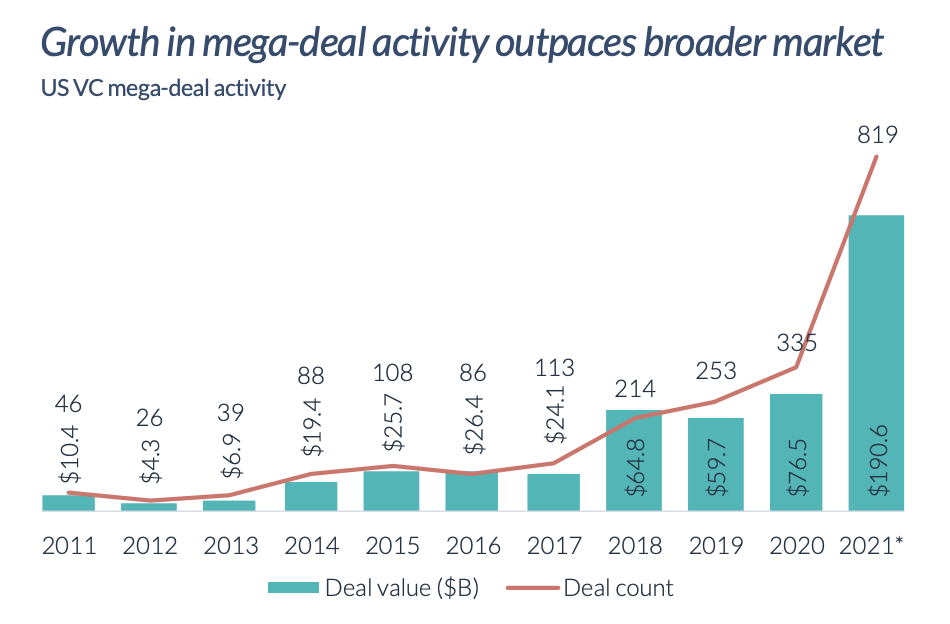
But things have changed since then.
We all know how the story went: rates went from near zero to almost 5% in the blink of an eye, and the glory days of VC came to a halt. Now, the asset class is suffering from not only a lack of liquidity but also very average returns, especially compared to the S&P 500 in the past few years.
Which begs the question: why invest in an asset class that is returning less than the S&P while being way less liquid?
Moreover, who in their right mind would pay 2 and 20 for that?
This is the simple question that many investors are beginning to ask themselves.
The combination of the higher cost of capital and concerns surrounding the return and liquidity profile has led to LPs drawing back a bit, negatively impacting GPs’ ability to raise.
When looking at private / public market comparison, things will likely balance out in the next several years. Realistically, the S&P 500 can only return 20% for so long on the back of AI expectations, and the abnormally high concentration from largest 5-10 players creates a real vulnerability to a potential correction. Additionally, rates will likely steadily decrease over next few years, hopefully providing a boost to the VC ecosystem.
However, LPs are thinking about the here and now.

This dilemma of low returns and liquidity for LPs has been the chatter for a bit now.
In the early stage world, another dilemma that seemingly goes unnoticed is the founder acquisition dilemma.
Very rarely do the stories of founders receiving a very minute payoff relative to the time, effort, and energy they put in after an acquisition reach the press.
We all see the typical headline of a company being acquired for a seemingly large amount, with the first reaction likely being “good for them…they likely never have to work again.”
And for a lot of them, this is true. They were able to secure terms that ensured that they would receive the exact amount that is promised based on their percentage ownership.
But that’s not always the case.
There are numerous examples of founders who pour their blood, sweat, and tears into a company for years, finally reaching the pinnacle of early-stage entrepreneurship—a payday through an IPO or acquisition—only to find themselves scratching their heads once the check hits their bank account.
Example 1: After a lucrative $50M exit through acquisition, this anonymous founder leaves with $2.4M to his name.
$2.4M is obviously a decent chunk of change, but not only is it less than what he was expecting, it’s also a similar amount to what he would’ve earned if he took the path at working for a blue chip tech company in Silicon Valley.
How exactly did this happen?
"Liquidation Preference: 1X Participating Preferred with 8% Cumulative Dividend."
After being told it was a VC standard to protect their downside if things go poorly, the founder did not give the measly line much thought. But this liquidation preference was more than just bear case insurance.
The founder scaled the company’s ARR from $500K to $8M and amassed a cohesive unit of 45 people, leading to the $50M acquisition offer.
Here’s how the actual math broke down: investors deployed $18M over three rounds:
Seed: 1X participating preferred
Series A: 1X participating preferred
Series B: 1X participating preferred + 8% cumulative dividends
The liquidation waterfall looked like this:
Series B investors: $10M + 5 years of 8% dividends ≈ $14M
Series A investors: $5M + participation ≈ $7M
Seed investors: $3M + participation ≈ $4M
In simple terms, a normal liquidation preference means investors can either choose to recoup their original investment or participate pro-rata. On the other hand, participating preferred is when investors get to eat their cake and have it, claiming their original investment and participating pro rata. In this example, this is the preference the seed and series A investors claim.
Even better is having participating preferred shares plus cumulative dividends that accrue over time.
With this in mind, right off the bat, half off the pie is gone and after a variety of fees, a small percentage of the sale price is left to split between employees and a handful of founders, leaving the main founder with just under 5% of the value, despite likely owning more than that.
But the examples get worse.
The next example includes a term sheet that had a 2x participating preferred rather than 1x. After raising $10M on a $20M valuation and selling the company for $30M, the investors had an immediate claim on $20M plus another $5M from the remaining $10M. The three founders, despite technically owning 16.7% of the company each, only walked away with roughly 5% of the sale price. Again, no one is saying a $1.7M check is meaningless, but it is undeniably much less than what outsiders would think the founders made.
The most tragic example is a $2.8M exit that saw the VCs take home $1.5M, brokers and lawyers receive nearly $400K, and debt holders take home another $400K. That meant that roughly $500K needed to be split between three founders, five employees, and two angel investors. After it was all said and done, the main founder walked away with a measly $43K.
Contrary to common perception, the founder role isn’t always as sweet as it seems and can be even more brutal if founders do not study the term sheet closely.
This isn’t something that only happens to founders of smaller companies.
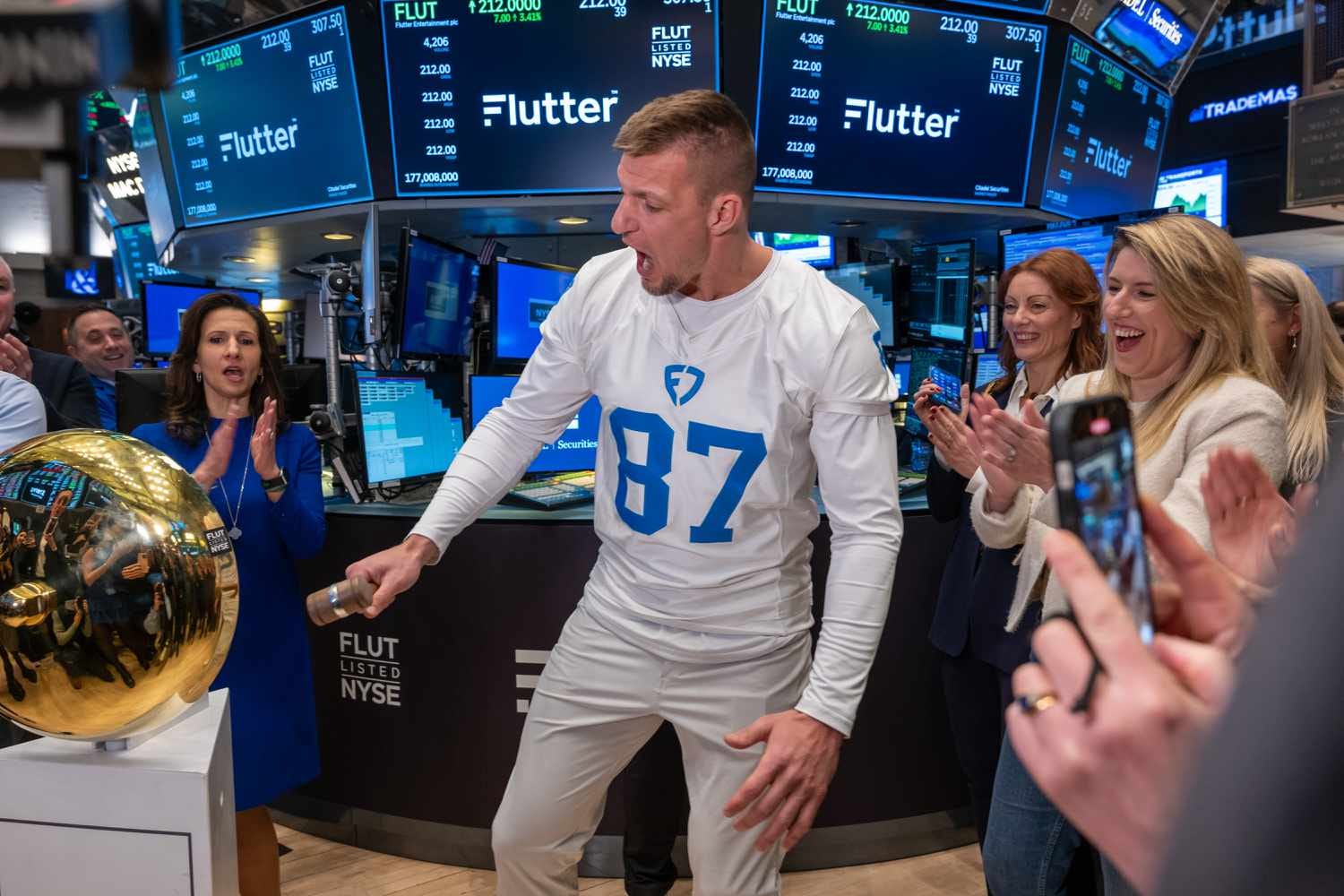
Despite becoming a unicorn in 2015, things were looking rocky for the sports betting app FanDuel just three years later. There was lots of regulatory pressure and other headwinds hampering them, so in 2018, they decided to sell 61% of the company to Paddy Power Betfair for $465M.
While some believe this figure came about organically, many people—both internally and externally—immediately called foul play. This is because $465M was just the right amount to satisfy the preferred shares of the company’s institutional backers. The common stock holders, like the founders and early employees, were left with basically nothing.
Lawsuits were filed rather quickly.
A question immediately arises: why would the board (mostly VCs) intentionally screw over the common stock holders? After all, some sort of conspiracy to ensure they walked away with nothing isn’t intuitive since the payout in this scenario isn’t zero sum.
The most likely answer is that the company, still under the regulatory headwinds described earlier, knew that some sort of exit as soon as possible would likely be best case scenario. In their eyes, trying to increase the value of the deal by $50M or $100M, for instance, would put the deal in jeopardy and leave both preferred and common shareholders with nothing. So, in a classic case of self-interest, they made sure that at least one of these groups would be well fed.
So far we’ve only explored liquidation preferences from the founders point of view.
Now let’s go over why liquidation preferences exist from an investors point of view.
The glaring answer is that such structures serve as the price for early stage risk; investors in highly volatile startups need additional protection to ensure their investment is prioritized, particularly in the cases of recapitalization or bankruptcy.
If 90% of startups fail, and 70% of venture backed startups fail, investors need to find ways to limit their downside. There were once times when founders could reach an acquisition exit for a price lower than the last round, cash themselves out, and leave investors with nothing to show for their capital investment. Liquidation preferences are a safeguard to prevent such scenarios.
However, participating preferences, with the double dip mechanisms discussed earlier, turn downside protection into an upside deal sweetener. They are used almost exclusively when the investor has leverage on the founder. In a founder friendly market, the standard 1x non-participating preference is a given. If a founder needs the cash and has no other option, the investor is more likely to pull out participating preferences.
As a founder, it is critical to think deeply about liquidation preferences in relation to capital raised. If you are raising relatively small amounts of capital, liquidation preferences have no stranglehold on your potential payouts. But if you load the money machine with $100M from Silicon Valley’s finest funds, be prepared to return it with interest. In today’s climate, raising a lot of money is treated as an accomplishment. Behind every excited announcement is an obligation. You are now forfeiting your optionality. Only an extreme right tail outcome matters now.
Sometimes slow is faster.