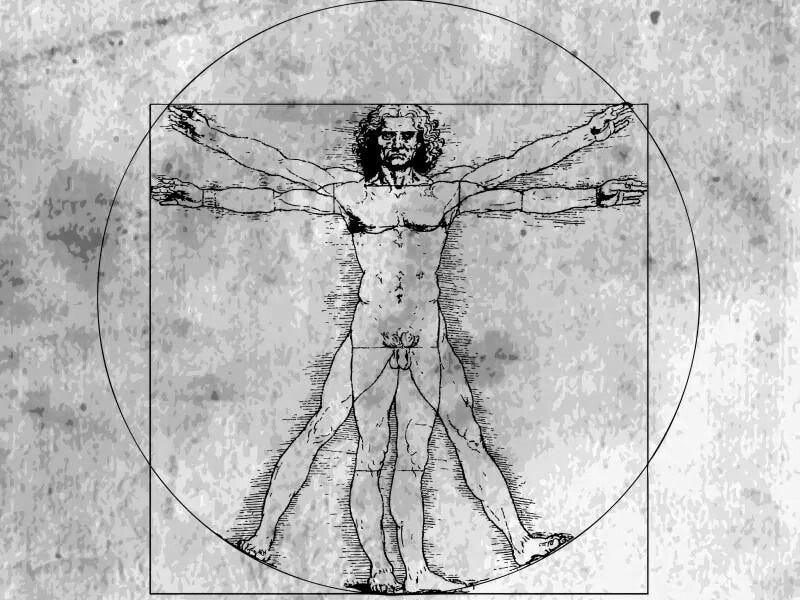
“A man can do all things if he will.”
This was the prevailing sentiment during the time of the Renaissance, a time of great flourishing in the arts, sciences, literature, and all of the subjects that drive a culture forward towards the true, good, and beautiful.
Leonardo da Vinci gave us the Last Supper, and Michelangelo produced the ceiling of the Sistine Chapel; both revolutionized art through realistic human bodies, dramatic lighting, and a new sense of depth and perspective. The rise of Copernicus birthed the heliocentric model, and Galileo Galilei took the blueprint and finished the job. Gutenberg invented the printing press, providing books with a level of accessibility that once seemed comical. The revival of Roman architectural forms led to some of the most beautiful European Cathedrals like the Florence Cathedral, engineered by Filippo Brunelleschi. Major advances in mathematics proceeded intense intellectual duels between men like Gerolamo Cardano and Niccolo Tartaglia. The Church underwent the Counter Reformation, weeding out much of the corruption and moral laxity through the Council of Trent, drawing on great minds like St. Augustine and St. Thomas Aquinas.
The advancement in so many different areas meant that many of the greatest minds from this era were experts in multiple fields.
Leonardo da Vinci was more than just a painter - he engaged in anatomy, engineering, mathematics, and military design, as he was known for designing flying machines, tanks, and hydraulic systems. Galilei was a high level engineer, mathematician, and philosopher in addition to his astronomical endeavors. While Galilei and da Vinci may be more notable historically, Leon Battista Alberti may have the best resume, as he was an architect, polymath, linguist, cryptographer, philosopher, artist, and an athlete. While he didn’t engage in any organized sports, he was the best horseback rider in town and could allegedly vertically leap over a standing man. He is where the preceding quote originates and rightly so.
The common traits among these men were intellectual curiosity, a desire to learn, and the belief that man–a strange hybrid between an immaterial / intellectual angel and beast-like animal–was a special creation from the fingertips of God whose essence was unlike any other being on this planet. The combination of man’s intellect and will, his faculties that separates him from the other animals, was what drove this ability to be rational yet creative and not only strive for expertise in a specific area like art, math, science, theology, or philosophy but all of them at the same time.
This man is not just any man; he is the Renaissance Man.
Shakespeare was something of a Renaissance man himself given his deep knowledge of law, psychology, politics, philosophy, theology, and of course, poetry. If this is the case however, why is he quoted as saying the jack of all trades is a master of none?
What people often forget is the quote is typically utilized in its incomplete form: “the jack of all trades is a master of none, but the jack of all trades is better than a master of one.”
Now this makes more sense.
Rather than pursuing the mastery of one sport, Casey Hayward began his sports journey as the jack of all trades. After all, the strive for greatness in multiple areas within the intellectual or athletic lanes is still highly admirable in today’s time. One can easily argue that Deion Sanders, through his ability to play both football and baseball professionally, is a more impressive athlete than Tom Brady, the consensus GOAT for football, as more people could conclude that Sanders’s feat of hitting a home run and scoring a touchdown in the same week is more impressive than Brady’s rings.
Born in Perry, Georgia, Hayward was a high level track & field athlete, competing in the 100 meter dash, long jump, and triple jump, where he finished second place at the prestigious Patriot Invitational with a jump of 45.5 feet. He was also a four-year varsity player on the basketball team, playing a pivotal role at the combo guard spot. Lastly, he was an animal on both sides of the ball for football; his senior year he totaled nearly 2,600 yards at QB, while rushing and passing for 18 touchdowns each. On defense, he was even better and was recruited by several schools to play cornerback. After receiving offers from Troy, Southern Mississippi, Duke, North Carolina, and Vanderbilt, the choice became obvious to him, as only one school had high level academics and played in the best conference in the country.

Hayward played during his freshman year and started his sophomore year, but it wasn’t until his junior year that he became one of the best corners in the country, as he ranked first in the SEC and third in the country in passes defended, earning 2nd Team All-SEC. The following year he was even better, being named an All-American after tying the Vanderbilt career interception record with 15, doing so in epic fashion in his last game as a Commodore. While his time at Vanderbilt was filled with accolades, the only regret he has is not beating Tennessee, despite paving the way for those who came after him, with Vanderbilt winning five out of the next eight matchups with the Volunteers.
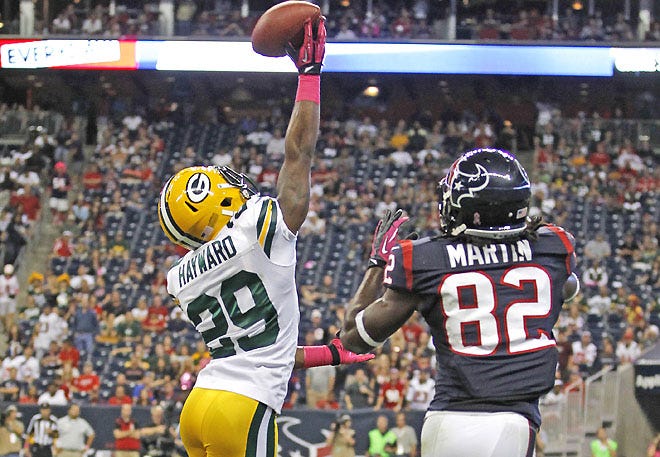
After being drafted to the Green Bay Packers in the 2012 NFL Draft’s second round, Hayward got busy right away, recording an unbelievable six interceptions, including four in a three game stretch. He was named to the All-Rookie team and finished third for Defensive Rookie of the Year. Hayward spent three more years in Green Bay before signing with the San Diego Chargers, where he again immediately burst onto the scene in a new environment. His 2016 and 2017 seasons included back to back Pro Bowls, 11 total interceptions–including a league best seven in 2016–nearly 100 tackles, and being named to the notorious NFL’s Top 100 Players list. When asked about what he remembers most vividly from his career, he cites Tyreek Hill’s speed and a Thanksgiving game victory against the Cowboys in 2017 where he had several notable pass break ups and an interception in the 4th quarter to seal the game.
When asked how he is able to collect so many interceptions, he keeps it simple:
“You either have it or you don’t… it’s always been something I was good at…with me, you know I’m going to get to the ball.”
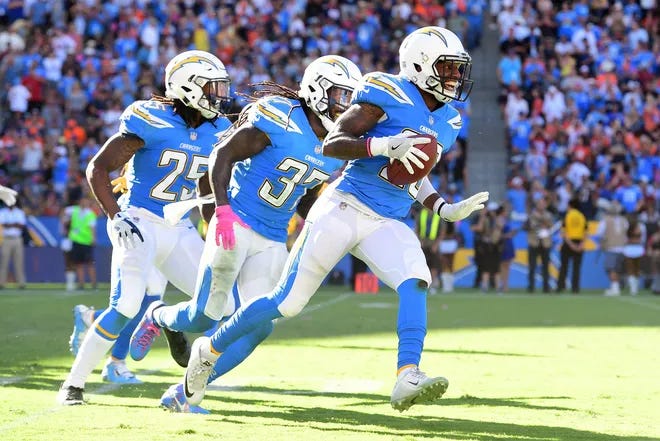
Hayward wrapped up a successful 11-year career in 2022 after spending a season with the Las Vegas Raiders and Atlanta Falcons each. It was now time for the next chapter. He knew he wanted to get into investing, he just needed to determine which asset class. After some deliberation, there was a clear winner: real estate.
The first reason was more practical than anything else: his cousin had put together an impressive real estate career, so he didn’t need to spend precious time and energy organically building a deal flow channel nor pay anyone for deal access. Rather, he would rely on his cousin’s pipeline in the beginning and over time understand how to source deals. He also was highly attracted to the income component of real estate, as the continuous stream of rental payments was something that immediately caught his eye. Not only were the income streams continuous, but he also noted the tax advantages that come with real estate that many other asset classes can’t boast of. Thus, the combined appreciation potential, steady cash flow, and strategic financial flexibility was enough for him to pull the trigger on the asset class.
Once real estate became the target, single-family homes became the focus, not only because the access was the highest due to pricing points, but also because he was most bullish on the space because of the unique demand for single-family units. Thinking about it at a high level, he intuited that the persistent demand for homeownership along with the limited housing supply in most markets creates a compelling long-term opportunity.
Hayward admits while he has purchased existing assets before and many have turned out to be successful investments, the satisfaction of building a unit from the ground up is hard to match. There is a unique fulfillment, he says, in taking a project from a raw piece of land to a fully realized community that families can ultimately call home. For Hayward, development is not just about financial returns, but about creating something tangible and lasting through vision, execution, and patience.
He also acknowledges the profound impact attending Vanderbilt has had not only on his life holistically but specifically in business, as many of the relationships he cultivated when he was at Vanderbilt and the Commodore connections he has made since graduating have served him well in his real estate journey.
Getting into some more specifics on what he looks for in the deals he does, he tells us the following:
“Location is obviously a massive component of real estate analysis, but for me it goes one step further than just which location is seeing growth…I have to be familiar with wherever I’m investing in. Most of my deals are places close to me [within a few hours of Perry, GA] because the insight that I have on these places serves as a potential alpha generator…the right information can be the difference between a project’s failure and success. You can receive all of the information in the world from someone else about places you’re not familiar with, but the level of trust in that information will never stack up against the information you’ve learned by yourself first-hand.”
“When it comes to return targets, it depends on what the project is. For standard single family units where the goal is to hold and receive cash flow through rent, the target is usually between 8 to 12 percent [internal rate of return]. On the other hand, I’ve been getting into flipping duplexes recently–with a time frame of 8 to 12 months–and we’ve had higher targets, typically 15% or above. We’ve been carving out a niche of affordable housing, typically $375K and below, that has served us well and will continue to keep executing.”
While the athlete investing wave we’ve seen recently has helped spark intrigue among many athletes, it isn’t always clear to younger athletes what the first step to getting a foot in the door actually is. Klay Thompson notably remarked that early in his career he wanted to get involved in investing but everyone made it seem like all you needed to do was “throw your money in a microwave and watch it grow.”
Thus, when asked about the advice he would give to younger athletes looking to get started, he has many thoughts. First, he underscores the importance of engaging with an asset class that you either have an advantage in, whether it is through your skillset or network, or one that you are highly passionate about and are willing to go above and beyond consuming everything there is to know about it. In the same way it makes sense to pursue the sport you have the most natural talent in and then continuously work to improve, the opportunity cost of engaging with asset classes that you’d be less successful in is extremely high, especially since a few percentage points in returns over decades amounts to very large sums of capital. He also advises athletes to strike while the iron is hot; in other words, don’t wait until you are retired to begin making connections, as meeting with people in the industry you’re looking to build in is mutually advantageous to both parties. For the players, meeting people who have decades of hands-on experience is obviously valuable both from a network and knowledge standpoint, but having connections to athletes from the business owners’ perspective is also key for the same reasons. Lastly, he urges athletes to have a well thought out plan for the short, medium, and long term but also not to be scared to iterate when things don’t go according to plan.
It is safe to say Hayward has done well within the real estate world. But that same desire to conquer all the fields that drove da Vinci, Alberti, and others during the Renaissance is simmering within Hayward. Just as da Vinci is known for art, Hayward’s investing legacy will likely be headlined by real estate. However, Hayward will soon branch into the other asset classes that he initially ignored to pursue a mastery in real estate because the pursuit for mastery in different domains seems to be hard-coded in our DNA.
Or at least hard-coded in the DNA of the greats.
Hayward has already passively invested in a few early stage funds in addition to investing in a few restaurants and acquiring a handful of Starbucks. Private equity / credit, hedge funds, art, and even crypto seem to be on the horizon for Hayward. As an athlete, he started as the jack of all trades before eventually transitioning to the master of one. With regards to his investing career, it has become inverted, starting as the real estate guru before beginning his metamorphosis into the multi-faceted investor.
Long live the Renaissance Man.
He is inevitable.