BUBBLY.
greed, pride, lust.

Trailer:
Before we jump into the deep end, a word on Caplight.

Who knows if we’re in a bubble or not.
What we do know is that Caplight can help you access liquidity in late stage companies.
One subscription to track all datapoints in the secondary venture capital market.
Trusted by Tier-1 investment banks and venture funds alike.
Book a demo here.
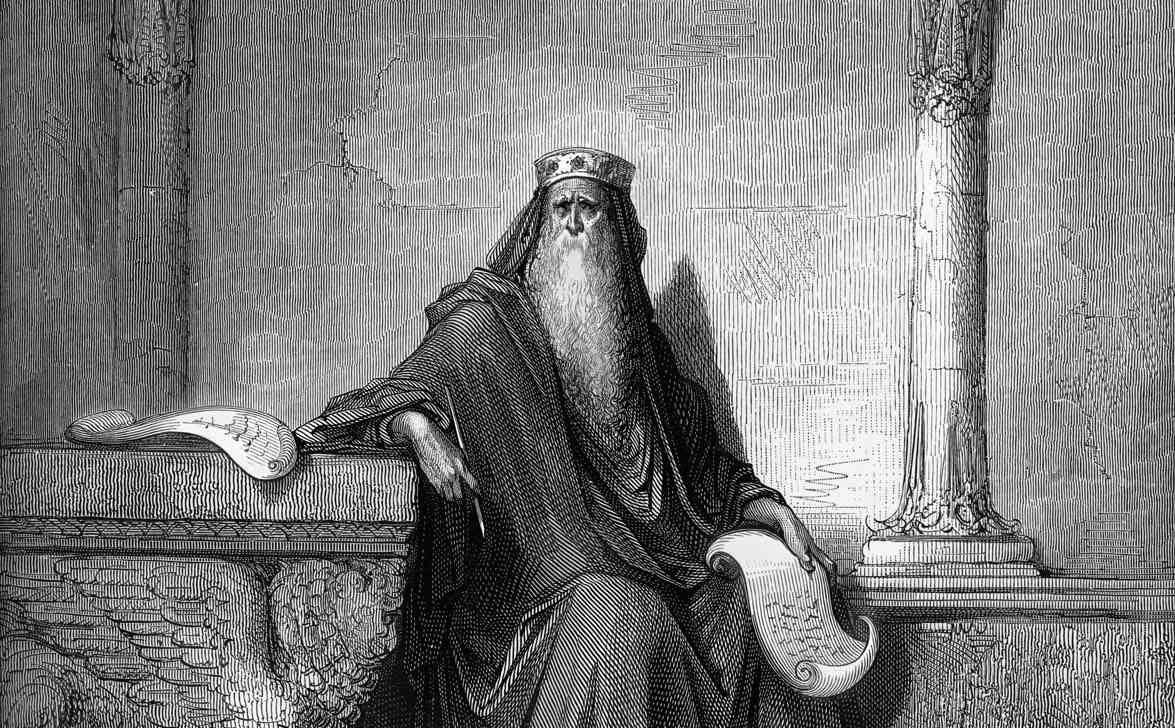
Pride goeth before destruction: and the spirit is lifted up before a fall.
A man, that maketh haste to be rich, and envieth others, is ignorant that poverty shall come upon him.
Wise words from a wise man.
Some would say the wisest man in history.
In 1998, Michael Jordan hit a game-winning jumper in Game 6 against the Utah Jazz, winning his sixth title in six tries. Everyone between the millennial and boomer age agrees that this feat made him the greatest player of all time.
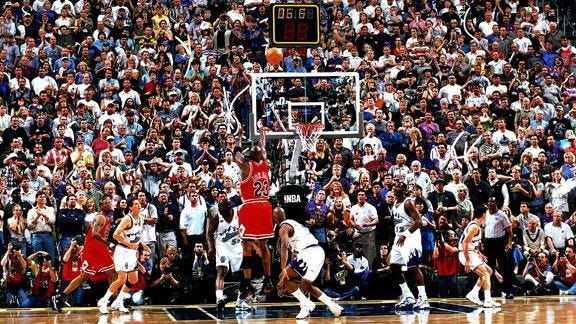
The moment was undeniably an impressive feat.
But arguably not the most impressive of the year.
By the end of 1998, Priceline, the online marketplace for airline ticket sales, had sold $35M worth of tickets. Strangely enough, the cost of those tickets came in at $36.5M, posting a negative gross profit before incorporating their $54M worth of operating expenses. When taking other miscellaneous expenses and the stock options distributed to investors, the company lost $150M.
On March 30th, 1999, Priceline debuted on the public markets, issuing 10 million shares at $60 each. The price peaked at $85 before falling back to $68 by the end of the day, valuing the company north of $10B.
The airline ticket marketplace that couldn’t even turn a gross profit had just reached a valuation that was larger than United Airlines, Continental Airlines, and Northwest Airlines combined.
Now that is the definition of impressive.
However, no one batted an eye.
It was just another day in the late 90s “Dot Com” era.
While everyone was in agreement that the Internet was the next big technological advancement that would increase efficiency and thus future profits, the optimism seemed to be a bit higher than normal.
At the time, the only technological development seemed to be militaristic with the development of the atomic bomb in WWII and the seemingly unending battle that was the Cold War. But eventually, it did end, right as the Internet began to develop.
The first major step was the development of Mosaic, the first web browser that was relatively easy to use, install, and work on a variety of operating systems. Before Marc Andreessen founded Mosaic, non-computer nerds had no chance of figuring out how to use the Internet, as people needed to be familiar with the Unix operating system and the TCP/IP communication protocols. Mosaic instantly made it more user-friendly by inserting scroll bars, pull down menus, the back-and-forth button, and images being displayed alongside text.
There was only one problem: Mosaic wasn’t technically owned by Andreessen. He was still a student at the University of Illinois and was a paid employee at the National Center for Supercomputer Applications at the school while he developed the software. When it became clear that the school had no intention to commercialize it, Andreessen had no choice but to move on, so he got a job at Enterprise Integration Technologies (EIT). It was here where Andreessen would receive an email from Jim Clark that would alter history forever.
Clark was a high school dropout that would eventually make his way to the Navy where he discovered he was something of a math genius. After this realization, he completed his his school degree before receiving a masters in physics at the University of New Orleans and a PhD in computer science at the University of Utah. Once he graduated, he borrowed $25K in 1981 to build Silicon Graphics, a company that provided high quality 3D graphics before most computers had the ability to do so. After a while, Clark shifted to the chairman position and brought on a chief executive named Ed McCracken.
It became apparent quickly that Clark and McCracken did not see eye to eye and Clark would eventually leave.
He needed a new gig.
One of his associates had showed him the new web browser Mosaic and he immediately knew it was special. He contacted Andreessen and made a simple proposal: find a way to rebuild it and he would finance it.
At the time, it wasn’t very obvious how money would be made on the Internet, as everything about it seemed to be free. But he would worry about that later. In his eyes, developing revolutionary technology came first.
The money would eventually come.
Clark, having dealt with VC firms for many years, held a contrarian view on the institutions. Everyone else believed that VCs were the protagonists of the American economy, taking on the role of the benevolent philanthropists that funded the best ideas and powering American ingenuity and prosperity. Clark firmly believed that VCs were nothing more than vultures that swoop in with a “lust for control” and a lack of hesitancy to screw over founders and companies if it means satisfying their investors. Because of this, Clark would only allow VCs to invest in his new company if he maintained 25% ownership and they paid 3x what he paid for the shares.
Most VCs saw this ultimatum and scoffed; how dare a founder try to set the rules in which the game was played. After all, this is traditionally the role of VCs.
They hold the money and thus the power.
John Doerr, however, gave it some thought. The Kleiner Perkins partner had been a part of several successful tech investments in the 1980s like Lotus, Compact, and Sun Microsystems, but the proceeding decade had seen some embarrassing flops. He was yet to hit a home run and he was ready to swing for the fences. His gut was telling him this was gonna be a hit so he acquiesced to Clark’s demands. Doerr invested $5M and Kleiner Perkins became the second largest shareholder behind Clark.
Clark had seemingly done the impossible and set the terms in his favor. He proved that founders could actually have leverage in the twisted game that is venture capital. He walked so Travis Kalanick could run.
Clark began to think even more outside the box.
The company’s business model was beginning to take shape. Mike Homer, the former Apple executive and now head of marketing, wanted to charge $99 for a copy of each browser. Andreessen instinctively knew this was not a good idea. People had been accustomed to using the Internet for free and placing a significant price tag in the early stages was antithetical to growth. The compromise was to allow students and educators to download the browser for free and charge enterprises for their web server.
The beta version was released in October 1994 and by March 1995, they had distributed more than 3 million copies and posted a top line of $7M.
“Why not just go public now?”
This thought from Clark was a bit bizarre. When he began to deliberate this, the company had only been in existence for about a year.
In addition to unlocking a larger pool of capital and giving existing investors liquidity, there was also some external pressure given that their competitors were planning to do an IPO soon. The IPO would not only raise capital but also serve as a marketing campaign to get the company’s name out there, since the company was doing well financially but wasn’t a household name yet.
So Clark called up his boy Frank Quattrone, an investment banker in Morgan Stanley’s SF office, and pitched him on the company. For a long time, there was a large chasm between the blue chip investment banks and Silicon Valley companies wanting to go public, as the investment banks that typically did these deals were Hambrecht & Quist, Montgomery Securities, and Robertson Stephens.
Quattrone wanted to break this mold and helped Morgan Stanley land emerging companies like Cisco Systems and Silicon Graphics, which is how he met Clark. The new chief executive Clark and Andreessen brought in, Jim Barksdale, wasn’t sure that the time was right; Q2 revenue was only $12M and they were losing quite a bit of money. But he would eventually flip on the position after Spyglass went public and gave the green light.
The IPO was set for August 9th and Morgan Stanley originally recommended a price of $31 per share. Barksdale wanted to be more conservative and insisted on $28.
Both were way off.
The demand was so high that the stock didn’t start trading two hours after opening bell. Around 11:30 AM EST, Clark’s secretary told him the stock opened at $71. Clark’s stake was now worth $663M.
Andreessen woke up after a long night of work and logged into to quote.com to check the stock’s price. He quickly calculated that his stake was worth about $70 million and then went back to sleep.
By December, the stock reached $170.
Netscape was on the path to becoming the next revolutionary company.
Bill Gates had other ideas.
As we read in Andreessen Horowitz II, Gates would eventually squash Netscape’s ability to compete after releasing Internet Explorer.
After seeing its market cap rise to nearly $7B, the company would be sold to AOL for $4.2B in 1998.
Andreessen, Clark, and the rest of the crew would have to go their separate ways to solidify their legacy.
Many companies sprung about around the same time and few were able to survive the impending crisis about to happen.
One of them was Amazon.
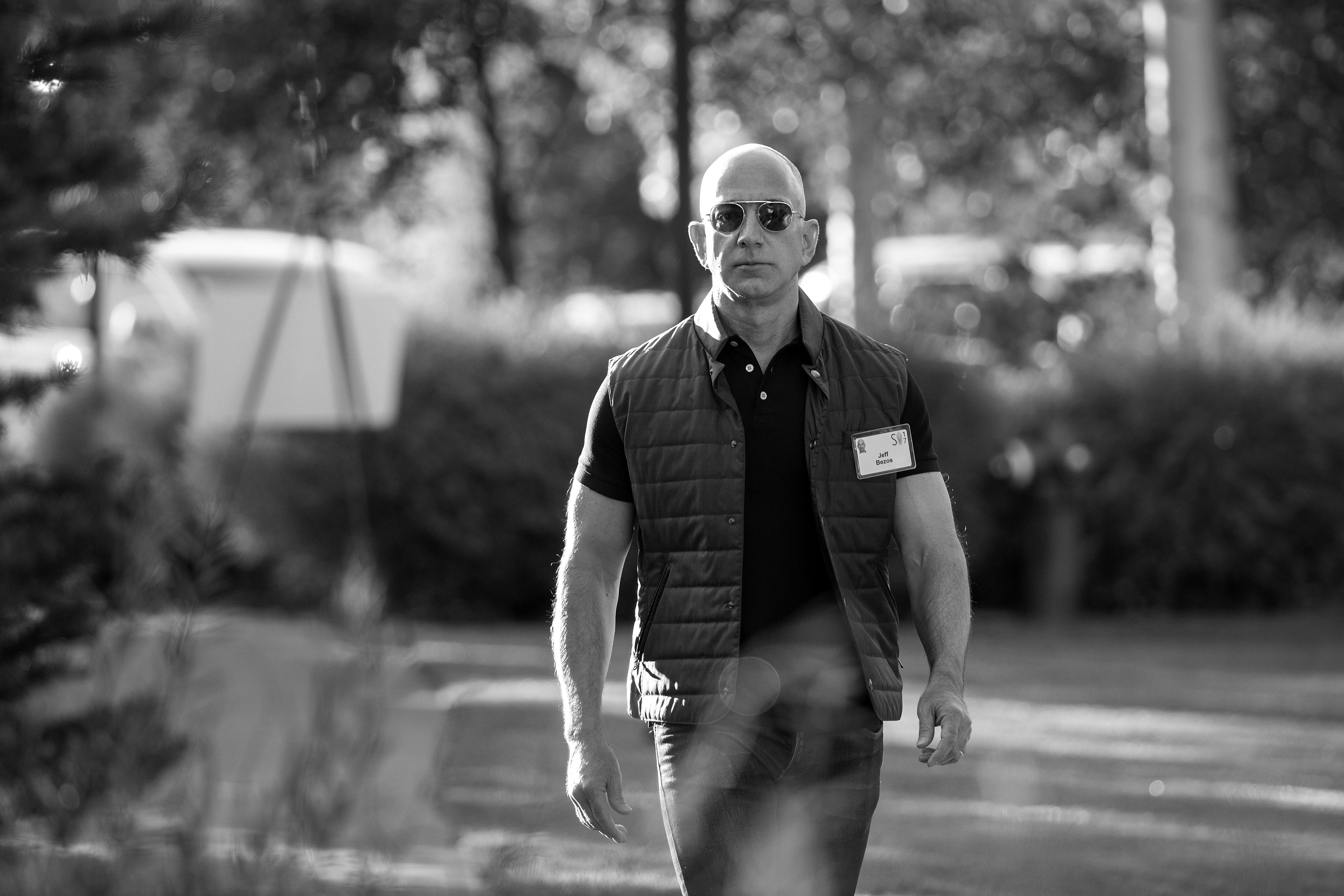
Many know of Jeff Bezos’s background: exceptional high school student, top of his Princeton class, worked at DE Shaw for a while before using the “regret minimization” framework to decide on quitting his job to build his own company. What some don’t know about his background is that the idea to build an online bookstore didn’t just magically pop into his head after he quit his job—his higher-ups at DE Shaw told him to investigate how to make money using the Internet. After he assessing different options, he landed on an online bookstore. It was only after they told him this wasn’t his brightest idea that he decided to take the venture into his own hands. He initially incorporated the company under the name Cadabra (ordering a book online and receiving it at your door soon after was considered magic at the time) but needed something that started with the letter A, as websites were typically listed alphabetically. He settled on the world’s largest river and attached the “.com” at the end to ensure everyone knew his company was an Internet company and not simply a bookstore. After all, it doesn’t take a genius to realize that an Internet company will have much more attractive multiples than bookstores.
The company hit the ground running and sold $12K worth of books in the first week. By the end of 1995, the company’s top line was $511K. The company’s prospects became much brighter once the Wall Street Journal published a piece in May of 1996 detailing how a young guy from Wall Street was now selling books on the Internet. This was the dagger for Bezos & Co. His business had turned from a modest small business to one answering the call of VCs day and night. Before the article, General Atlantic was interested in investing $1M on a valuation of $10M. After, he had several offers for valuations of $100M.
The power of the press.
It wasn’t strictly hype however. The publicity served as a real shock to the company’s top line and it was seeing serious growth.
After sifting through the suitors, Bezos chose the established Doerr from Kleiner Perkins and received $8M in funding on a $60M valuation. This created a great cycle for Amazon, as the media coverage led to growth which led to more investors which led to more capital which they could then use to buy ads to get even more media exposure. They were soon everywhere: USA Today, WSJ, NYT, The New Yorker, Atlantic, and Wired.
Next came the IPO.
Quattrone had moved on from the Morgan Stanley and now heading the ship was Mary Meeker. Meeker interestingly was not on the equity capital markets team but was rather on the equity research team. That didn’t matter to her. She worked closely with the ECM group and held real sway there. Looking at Amazon, she knew this was Morgan Stanley’s next target.
To Meeker’s frustration, the bank’s top executives overruled her desire to underwrite the offering because of the longstanding relationship between the firm and Barnes & Noble. In fact, she was so angry she nearly resigned. Quattrone had moved to Deutsche Bank and helped the firm secure the offering.

The initial target was to issue about 2.5M shares for $12-$14 each.
Interestingly, in the company’s prospectus, Amazon was extremely clear that it would continue to suffer substantial operating losses for the foreseeable future, and the losses would increase over time given the competitive nature of the online e-commerce market because there are little to no barriers to entry. Those with any semblance of economic knowledge know that, in theory, industries with no barriers to entry likely won’t see any profit, as competitors will be able to enter the market freely and undercut the firms generating profits. So why would anyone invest in Amazon?
Besides the large gap between economic theory and reality, Amazon had a simple roadmap: the winner-take-all model. Their goal was to raise a ton of money from investors to offset the losses suffered due to low prices, build market dominance, and then after achieving this dominance eventually increase prices incrementally and focus towards generating profits.
In hindsight, we can all agree this worked well for them.
At the time, it would have been fair to question how exactly they would survive if it their total cost to ship a book was $25 and the average price was $20.
However, given the frenzy surrounding Internet companies, no one bothered asking these types of questions.
A few days before the IPO, Deutsche increased the share total to 3M and the price to $18. By the end of the day, it had jumped to just under $24, and both Bezos and Kleiner Perkins saw their stake balloon to a nine figure amount.
Again, public market investors really were not necessarily investing in Amazon because they thought Bezos was a once in a lifetime founder, or because they believed it was a generational product, or because they believed in the business model. It was really because Amazon was one of many companies that was connected to the Internet by sheer fate, and the company along with all of the rest were going to ride the miraculous tide of the 90s and the Internet into the sunset of the forever profits, prosperity, and peace that the internet would inevitably create. After all, the Internet brought about the new economy in which the money spent on the web was finally starting to materialize into revenue. More importantly, economics had been solved and the idea of a recession was in the past.
1998 was the year of the Internet.
Scratch that.
1998 was the year of the Internet stock.
AOL increased 593%.
Yahoo increased 584%.
Amazon increased 970%.
While the rest of the world posted average economic numbers, America was flexing its supremacy once again.
The country was invincible. The Internet had solved the classic “boom and bust” economic cycle once and for all.
Or so it seemed.
Pride always precedes the fall.